
Reviewed · KAMPALA CITY TOURS
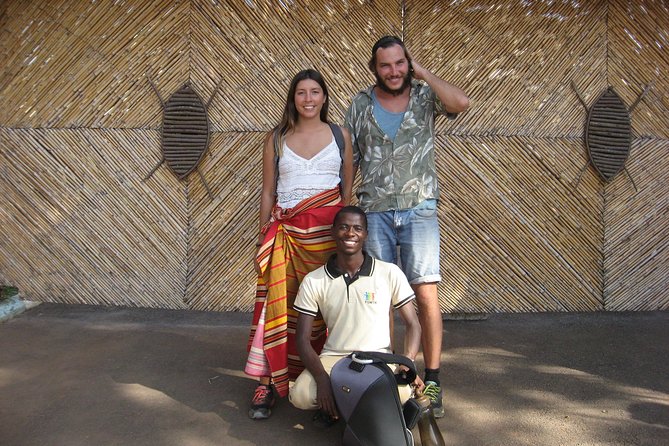
Steve Kampala Walking tours (Airpals Safaris tour)
Kampala reveals itself one street at a time. Steve Kampala Walking Tours offers an unusually broad look at Uganda’s capital, from Makerere University and the Katanga slums to Nakasero Market, Owino Market, and Namirembe Cathedral. I like the mix of history and ordinary city life, and I like the small group limit of 10 people, which makes questions and route changes easier. The main caution is pace: this is a lot of ground in about four hours, and one recent experience finished closer to three.
You’ll also get practical help along the way. Steve has helped visitors sort out transport, take photographs, and find a local Rolex, Uganda’s famous chapati-and-egg street snack. Guides can include Steve, Getrude, or Ben, and the strongest experiences praise their friendly manner, clear explanations, and willingness to adjust to a visitor’s interests or physical limits.
In This Review
- Key points to know before booking
- Why this Kampala walk is different
- Starting at Makerere University
- Katanga slums and a more difficult side of the city
- Bagala Craft for souvenirs and bargaining time
- The Independence Monument and Uganda’s political story
- Nakasero Market, where Uganda’s food supply comes alive
- The Sanatan Dharma Mandal temple
- The World War II Memorial and Uganda’s wartime role
- Kampala Old Taxi Park and the city’s organized chaos
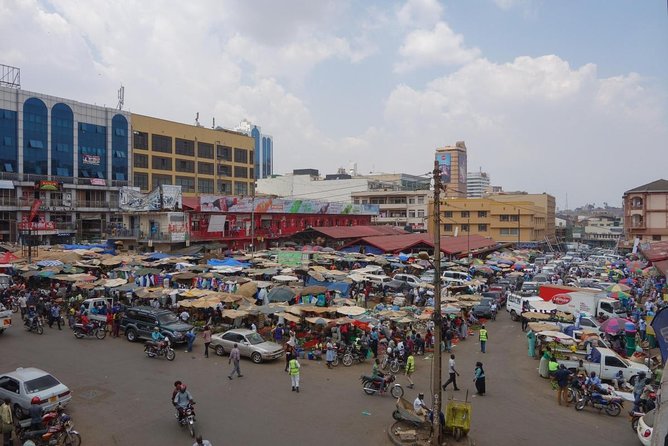
- Owino Market and a hard-working commercial center
- Namirembe Cathedral and the city from above
- Timing, comfort, and the real value of $28
- Who will enjoy this route most
- Should you book Steve Kampala Walking Tours?
- FAQ
- How long does the Kampala walking tour last?
- How much does the tour cost?
- How large is the tour group?
- Are morning and afternoon tours available?
- Where does the tour begin?
- Where does the tour finish?
- Does the tour include shopping?
- Can service animals join the tour?
- Can I cancel for a full refund?
- What happens if bad weather cancels the tour?
Key points to know before booking
- Ten stops in roughly four hours: Expect a fast-moving introduction rather than a slow, detailed visit at each place.
- Markets are central to the experience: Bagala Craft, Nakasero Market, Owino Market, and the Old Taxi Park show Kampala at work.
- The tour goes beyond formal sights: Katanga slums and Kampala’s transport hubs offer a more direct look at daily city life.
- History comes in short lessons: The Independence Monument and World War II Memorial provide useful context about Uganda.
- Morning and afternoon departures are available: Choose the time that best suits your energy, heat tolerance, and plans.
- The advertised price is $28 per person: That is fair if you want local guidance and context, but less compelling if you prefer a slow, museum-style tour.
Why this Kampala walk is different
Many city tours stick to palaces, mosques, museums, and grand public buildings. This one takes a wider route through Kampala, mixing formal landmarks with markets, commuter transport, a university, a temple, and a low-income neighborhood.
That range is the point. You get a quick lesson in Uganda’s political past, then move into places where people shop, work, worship, commute, and sell goods. I find this kind of route more useful than a checklist of monuments because it helps you understand how the city functions today.
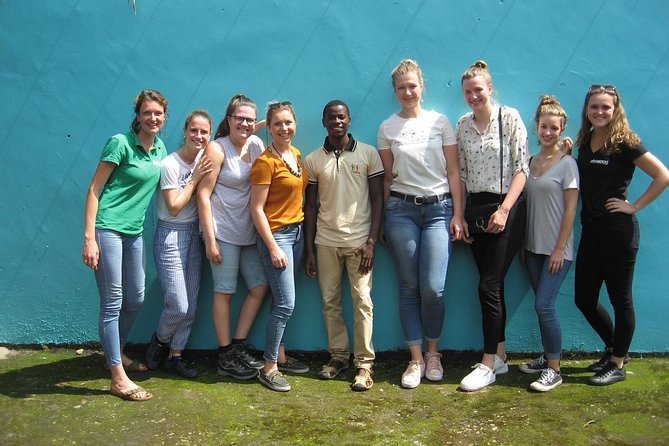
The tour is capped at 10 people. That is small enough for the guide to hear your questions, keep the group together, and offer some individual help. One particularly useful example involved Steve waiting with a visitor while an Uber was arranged. Another guide adjusted the experience around a participant’s physical limitations.
The tradeoff is depth. Ten stops sound impressive, but most last between 10 and 20 minutes. You should expect short explanations and a lot of walking, not extended visits or long pauses for photographs.
More Kampala city tours:
- Kampala Walking City Tours (Women Guided)
★ 5.0 · 115 reviews - Kampala Walking Tour (3 Hours) with Optional Gaddafi Mosque Visit
★ 5.0 · 112 reviews - Kampala: City Guided walking sightseeing Tour
★ 4.7 · 52 reviews
Starting at Makerere University
The walk begins at the main gate of Makerere University. You spend about 15 minutes walking through the university grounds, which gives the day an academic and civic opening rather than dropping you straight into market noise.
The stop is brief, but it helps place Kampala in a wider Ugandan setting. Your guide can explain the university’s role and answer questions about the city, the country, and Uganda’s political geography. Since the visit is a walk-through, do not expect a formal campus tour or an admission-based activity.
This is also a useful point to settle into the group. If you have questions about Kampala, ask early. The route covers a lot, and the quality of the experience improves when you turn the walk into a conversation rather than waiting for a speech at every stop.
Katanga slums and a more difficult side of the city
The 20-minute visit to Katanga is one of the most confronting parts of the route. You walk through the area to see how people live in a part of Kampala that most independent sightseeing routes would skip.
This can be meaningful, but it calls for care and humility. The visit is not an attraction in the usual sense. You are passing through a lived-in neighborhood, so your guide’s tone and your own behavior matter. Follow instructions about photographs, avoid treating residents as scenery, and keep an open mind.
One account found this section emotional and humbling. Another felt that the walk through the area was too rushed and lacked enough explanation. That contrast is important. If you want a thoughtful discussion of housing, work, services, and daily routines, ask the guide to slow down and provide context. If the group is moving quickly, this stop may feel more like an impression than an informed visit.
Bagala Craft for souvenirs and bargaining time
Bagala Craft is described as Kampala’s biggest craft market, with a broad range of souvenirs. You get about 20 minutes to shop, making this a practical pause after the more serious Katanga visit.
The short time works well if you already know what you want. You might find carved items, handmade decorations, textiles, or other gifts, but the available information does not specify individual stalls or products. Your guide can help you get oriented and may assist with choosing a first purchase.
Do not treat this as a relaxed shopping afternoon. Twenty minutes goes quickly, especially if you want to compare items or negotiate. If craft shopping is a major reason for booking, ask in advance how much time can be set aside. If not, use the stop to pick up a small reminder of Uganda without carrying your shopping for the entire walk.
More walking tours in Kampala:
- Kampala’s Best Experience walking tour
★ 5.0 · 137 reviews - Inside Kampala Walking Tour (Female Guided)
★ 5.0 · 52 reviews - Kampala: 3-Hour Walking Tour with Optional Gaddafi Mosque
★ 4.6 · 50 reviews - Kampala Heart of Walking Adventure
★ 5.0 · 43 reviews
The Independence Monument and Uganda’s political story
At the Independence Monument, the group sits for roughly 20 minutes to learn about Uganda before and after independence and the meaning of the monument.
This is one of the strongest stops for people interested in politics and national identity. Several positive experiences singled out the monument as a highlight, and the guide’s explanation of Kampala’s political and geographic setting is one of the tour’s most praised features.
The value here depends on the guide. Steve has been described as patient and able to answer questions, while Getrude and Ben have also received praise for explaining the city and its past. Ask about the monument’s symbolism, the transition to independence, and how national politics shaped Kampala. A good question can turn a short stop into one of the day’s most useful lessons.
Nakasero Market, where Uganda’s food supply comes alive
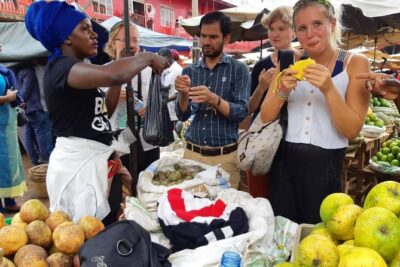
At Nakasero Market, you have about 15 minutes to look at and taste different fruits. The tour presents this as a chance to see Uganda’s strong agricultural production through the food sold in the city.
This stop is short but sensory. Instead of only hearing about Uganda’s food system, you see produce in front of you and may get a chance to taste something unfamiliar. It also gives you a look at an everyday market used for shopping, not simply arranged for sightseeing.
The market visit is observational rather than a dedicated food tour. You should not expect a long tasting session or a full explanation of every fruit. Still, it is a good moment to ask what is grown locally, what people buy most often, and how Kampala’s markets connect the capital with the rest of Uganda.
The Sanatan Dharma Mandal temple
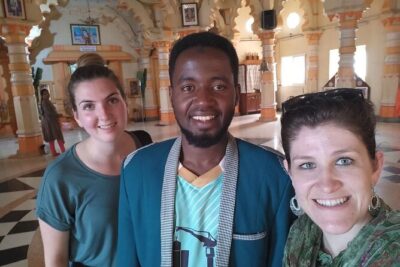
The group spends about 15 minutes inside the Temple SSDM Shree Sanatan Dharma Mandal, looking at its architecture and interior beauty.
This adds a religious and cultural angle that may not appear on a standard capital-city walk. The temple also breaks up the outdoor route and gives you a chance to see a place of worship rather than only public monuments and commercial areas.
Because the stop is brief, the guide’s explanation matters. Ask about the temple’s name, its community, and the architectural details you are seeing. Dress and behave respectfully, and follow any instructions given before entering. The supplied information does not specify photography rules or worship schedules, so do not assume that every area is open for photographs.
The World War II Memorial and Uganda’s wartime role
The World War II Memorial receives about 10 minutes. Here, the guide explains Uganda’s participation in the war and the positive and negative effects connected with it.
It is a compact stop, but it widens the story beyond Uganda’s independence. You get a reminder that the country’s past also connects to global events and colonial-era decisions. Ten minutes is enough for an introduction, but not a long historical lecture.
If this subject interests you, ask for more detail while walking between stops. The route has many transitions, and a question can encourage the guide to connect the memorial with Uganda’s wider political story.
Kampala Old Taxi Park and the city’s organized chaos
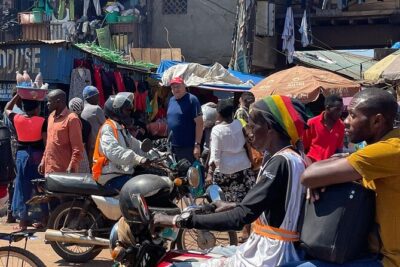
The Old Taxi Park is one of the most visually memorable locations. Thousands of commuter taxis gather there, competing for passengers in a scene the tour presents as organized chaos.
You will not spend long here, only around 10 minutes, but that may be enough. The taxi park shows how people move around Kampala and why the city can feel intense even when you are simply standing at the edge of the action.
This is a place to stay close to the guide. The itinerary involves crowds, traffic, and constant movement, so keep your valuables secure and listen for instructions. The taxi park was singled out as a highlight in one particularly positive experience, and I can see why. It offers a direct look at Kampala’s daily rhythm with no museum glass between you and the city.
Owino Market and a hard-working commercial center
Owino Market, also called Kampala Market, is described as the city’s biggest market. It is especially known for second-hand clothing, though you can find many other goods there as well.
The visit lasts about 15 minutes. That gives you a quick view of a large commercial center, but not enough time to browse every section. The market may feel crowded and intense, so this is not the place for a slow, relaxed stroll.
The best way to approach Owino is as a field lesson in commerce. Notice how goods move, how sellers arrange their stock, and how different sections serve different needs. If your guide is quiet here, ask direct questions. One negative experience felt that the market and slum sections were rushed and under-explained, so active conversation can make a real difference.
Namirembe Cathedral and the city from above
The final listed stop is Namirembe Cathedral, set on a hill with broad views over Kampala. The group spends about 10 minutes here.
The viewpoint gives you a chance to make sense of the city after walking through its markets, roads, and neighborhoods. You have seen Kampala at street level all day, so looking across the city helps connect those separate impressions.
The cathedral visit is brief, and the available details focus on the view rather than a full architectural or religious tour. The end point information says the first part finishes at Namirembe Cathedral and the second part at Kasubi Tombs. Since the listed stop details do not explain the Kasubi portion, confirm the exact finishing point and whether it is included in your booked version.
Timing, comfort, and the real value of $28
At $28 per person, the tour is reasonably priced for a small-group introduction with a local guide. You are paying for the route, explanations, help with practical questions, and the confidence to enter places you might not visit alone.
The value is strongest when you want context. A guide can explain the Independence Monument, interpret the taxi park, help you navigate the markets, and point out details you would otherwise miss. One positive experience valued Steve’s restaurant suggestion and transport advice after the walk, while another praised his help with an Uber and photographs.
The value drops if you expect four full hours of steady guiding. The advertised duration is approximately four hours, but one experience ended after about three. The walking sections may also include quiet stretches. If a guide recites facts without engaging with your questions, the day can feel less worthwhile.
Wear comfortable shoes and prepare for a substantial amount of walking. The group visits markets, roads, a university, a slum area, a temple, and a hilltop cathedral, so the route is not a polished sightseeing circuit. Most people can take part, service animals are allowed, and the activity is near public transportation, but the information does not provide a precise accessibility assessment for every surface or stop.
Free cancellation is available up to 24 hours before the start time. Inside that window, refunds are not offered. Poor weather or failure to meet the minimum group size can lead to a different date, another experience, or a full refund.
Who will enjoy this route most
I would choose this walk if you are visiting Kampala for the first time and want orientation quickly. It suits you especially well if you prefer markets, public life, political context, and ordinary neighborhoods to a list of formal attractions.
It is also a good fit if you want a small group and a guide who may adapt the conversation. Ask for Steve, Getrude, or Ben if the booking system allows a guide choice, but do not assume a particular person is guaranteed.
You may want another option if you need a slow pace, long historical explanations, or quiet time at each landmark. The tour covers a lot, and the short stops can feel hurried. You should also be ready for the emotional weight of Katanga and the sensory intensity of the markets.
Should you book Steve Kampala Walking Tours?
I would book it for a first look at Kampala, especially if you value local daily life over polished sightseeing. The route includes strong contrasts, the group is limited to 10, and the best guides provide useful history, practical advice, and a feeling of safety.
Book with realistic expectations. You are getting a brisk city orientation, not a private academic tour, and the experience can depend heavily on the guide’s energy and how much conversation you create. Confirm the total duration and the Kasubi Tombs arrangement before paying.
At $28, it is good value when the guide is engaged and the full route runs as planned. If you want to test the experience at a lower personal risk, a tip-based free walk may suit you better. For most first-time visitors who want to understand Kampala beyond its headline monuments, this is a worthwhile starting point.
FAQ
How long does the Kampala walking tour last?
The advertised duration is approximately four hours. One recorded experience finished after about three hours, so confirm the expected timing when you book.
How much does the tour cost?
The listed price is $28 per person.
How large is the tour group?
The tour has a maximum of 10 participants.
Are morning and afternoon tours available?
Yes. You can choose between morning and afternoon tour options.
Where does the tour begin?
The tour begins in Kampala, with the detailed meeting point at the main gate of Makerere University.
Where does the tour finish?
The listed route ends at Namirembe Cathedral. The meeting information also says the first part ends there and the second part ends at Kasubi Tombs, so confirm which ending applies to your booking.
Does the tour include shopping?
Yes. You have about 20 minutes at Bagala Craft, a large Kampala craft market with souvenirs.
Can service animals join the tour?
Yes. Service animals are allowed.
Can I cancel for a full refund?
Yes, if you cancel at least 24 hours before the experience start time. Cancellations made within 24 hours are not refunded.
What happens if bad weather cancels the tour?
You will be offered a different date or a full refund if poor weather causes the cancellation.
Just added around Kampala
- 4-Day QENP, Gorillas in Bwindi and Lake Bunyonyi relaxation★ 5.0 · 3 reviews
- 3 Days Murchison Falls Wildlife Safari★ 4.5 · 3 reviews
- 3 Days Private Tour in Murchison Falls National Park★ 5.0 · 3 reviews
- 2Days Murchison Falls NP Safari★ 5.0 · 3 reviews
- 2-Day Wildlife Safari in Lake Mburo National Park★ 5.0 · 3 reviews
- Kampala: Female-Guided Walking Tour★ 3.7 · 3 reviews
- Entebbe kampala airport transfers★ 5.0 · 3 reviews
- From Kampala: Ziwa Rhino Sanctuary Day Tour with Lunch★ 4.7 · 3 reviews
Kampala City Tours, compared.
Kampala Walking Tour (3 Hours) with Optional Gaddafi Mosque Visit
Read our review →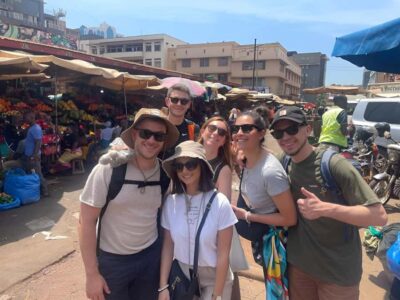
Browse the lists this tour appears in