
Reviewed · KAMPALA CITY TOURS
Kampala cultural tours
Kampala tells its story through royal sites and daily life. This seven-hour cultural tour gives you a practical way to see major Buganda landmarks, from Kasubi Tombs and Kabaka’s Palace to craft markets and traditional food. I like the small-group format, with no more than 10 people, and I like the hotel pickup and private transport, which save you from sorting out Kampala’s busy streets on your own.
The tour also reaches beyond monuments. You may watch craft making, hear local stories, see traditional objects, learn about spiritual healing, and stop for a local lunch. The main caution is cost clarity: entrance fees are not included, and one visitor reported paying $10 at one site and $20 at another despite finding the former royal house largely empty.
In This Review
- Key points to know before booking
- Why Buganda matters in Kampala
- Starting at Kasubi Tombs
- The Uganda Museum and its changing displays
- Kabaka’s Palace and the royal route
- The Torture Chambers and difficult history
- Kabaka’s Lake and Kampala’s outdoor view
- Craft markets, food, and everyday culture
- What the $100 price really buys
- Transport, group size, and the seven-hour schedule
- Who will get the most from this tour
- Booking and cancellation in plain terms
- Should you book Kampala cultural tours?
- FAQ
- How long does the Kampala cultural tour last?
- Does the tour include pickup?
- How many people can join the tour?
- Is lunch included?
- Are entrance fees included in the $100 price?
- Which major cultural sites are included?
- Can I cancel for a full refund?
Key points to know before booking
- Kasubi Tombs begin the cultural journey, offering an important look at Buganda’s royal traditions and burial customs.
- The Uganda Museum adds wider national context, but its renovation status can affect what you see.
- Kabaka’s Palace, the Royal Mile, and Kabaka’s Lake connect royal power with Kampala’s streets and public life.
- A maximum of 10 people keeps the outing more personal than a large coach tour.
- Lunch, bottled water, transport, and pickup are included, while site admission costs extra.
- The $100 price is strongest for visitors who value convenience, especially on a first visit to Kampala.
Why Buganda matters in Kampala
This is not simply a drive around Kampala with a few photo stops. The tour centers on the Buganda Kingdom, one of the key traditional institutions shaping Uganda’s cultural identity. You get a look at royal customs, local beliefs, craft work, food, and social traditions in one day.
That focus gives the route more purpose. Instead of seeing isolated buildings, you can connect the palace, royal road, lake, burial site, market, and museum as parts of a larger story. Your guide provides commentary along the way, which matters because several sites may not explain themselves clearly to a first-time visitor.
I would choose this tour early in a Kampala stay. It gives you a useful framework for understanding the city before you spend time exploring on your own. The format also suits you if you want cultural background but do not want to arrange several separate taxis, admission stops, and meals.
More Kampala city tours:
- Kampala Walking City Tours (Women Guided)
★ 5.0 · 115 reviews - Kampala Walking Tour (3 Hours) with Optional Gaddafi Mosque Visit
★ 5.0 · 112 reviews - Steve Kampala Walking tours (Airpals Safaris tour)
★ 5.0 · 89 reviews
Starting at Kasubi Tombs
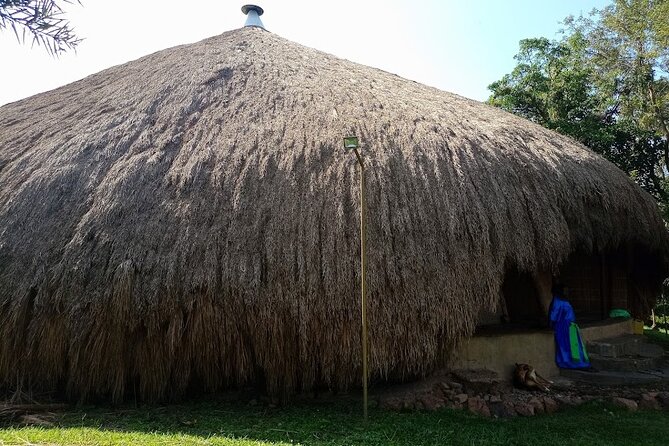
Kasubi Tombs is presented as the first major stop. The site is a UNESCO World Heritage Site and one of the most important Buganda locations on the route. It is connected to the kingdom’s royal family and traditional burial practices, so this is more than an ordinary historic building visit.
You should expect the site to carry spiritual and cultural weight. The value comes from learning how Buganda honors its kings and preserves its traditions. Your guide can help explain what you are seeing, including details that may be easy to miss if you arrive without context.
Allow yourself to listen closely here. This is one of the places where the guide’s storytelling is likely to matter more than a quick photograph. The tour also includes traditional artifacts and cultural explanations, so Kasubi helps set the tone for the rest of the day.
Site conditions and access can change. The experience description does not give a current admission price for Kasubi Tombs, and entrance fees are separate from the tour cost. I would carry extra Ugandan shillings or confirm the current fee before departure.
The Uganda Museum and its changing displays
The Uganda Museum is described as the oldest museum in East Africa. That gives it a useful role in the itinerary because it broadens the story beyond Buganda and places the kingdom within Uganda’s wider cultural setting.
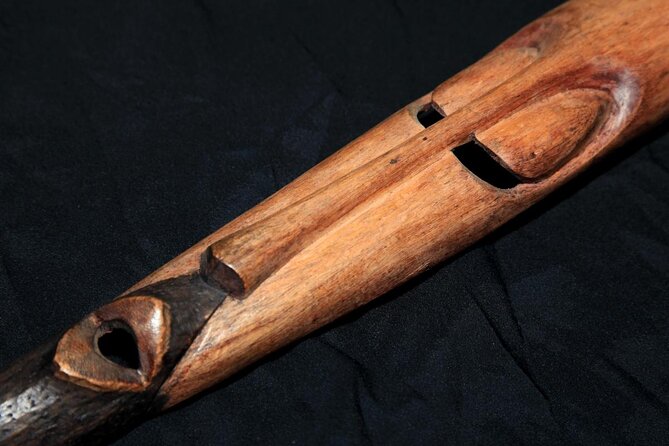
You may see traditional objects, historical displays, and examples of social life from across the country. For you, the museum can provide the background needed to understand the customs and objects encountered later at markets and cultural sites.
There is an important warning here. The museum was reported closed for renovation at one point, so you should check its current status before booking or on the morning of the tour. A closed museum can reduce the value of a seven-hour cultural route, particularly if you are paying full admission fees elsewhere.
If the museum is open, it adds balance to the day. Kasubi and the royal sites focus heavily on Buganda, while the museum gives you a broader Uganda view. If it is closed, ask your guide how the time will be used instead.
Kabaka’s Palace and the royal route
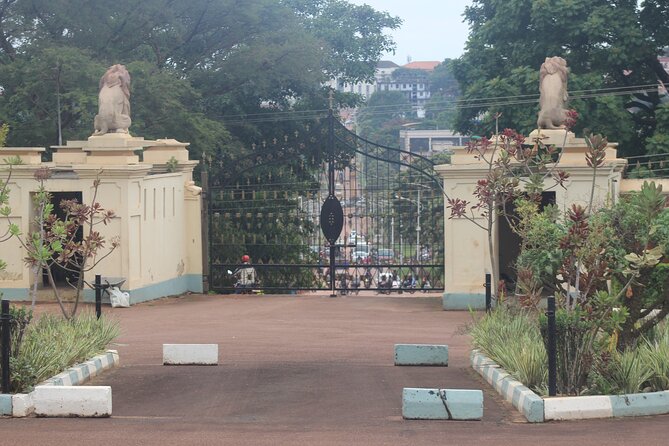
The tour continues to the Buganda King’s palace, along with the Royal Mile. These stops are central to the tour’s theme, since they connect the kingdom’s modern presence with its royal past.
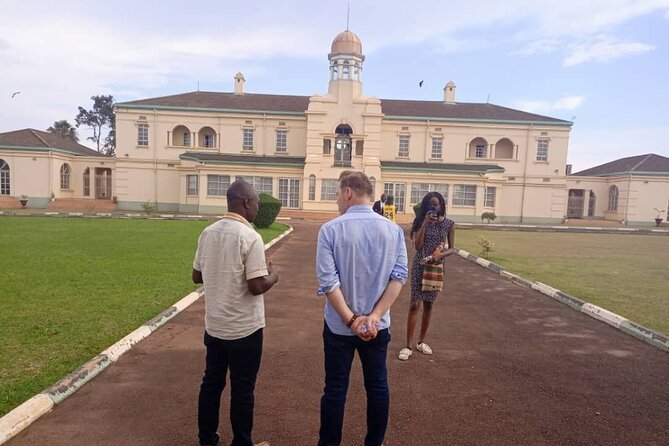
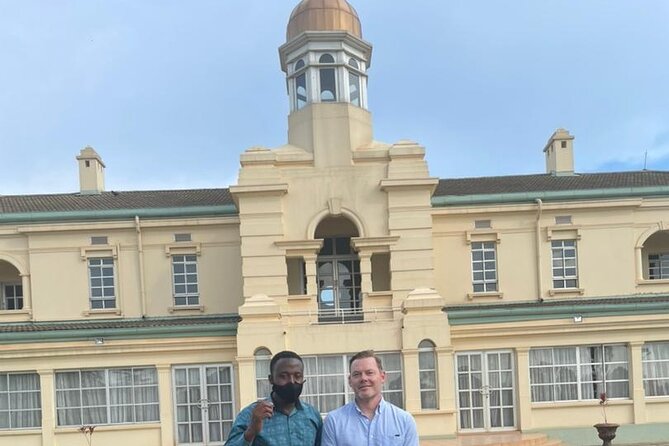
The palace is also known as Mengo Palace, but the supplied tour details use the broader description of Kabaka’s Palace. You should not expect access to every part of the royal compound. One visitor found that the palace itself was not clearly visible and paid an additional $20 to see a former king’s house that felt empty. That makes it sensible to ask exactly which building or area your admission fee covers before entering.
This is a practical point, not a reason to dismiss the whole tour. Palace grounds and royal sites can have restrictions, separate charges, or limited access. Still, the guide should explain what you are paying to see. If the main value is the surrounding history and commentary, you will want to know that before handing over extra money.
The Royal Mile adds an urban element. Instead of looking only at a contained monument, you see a route associated with the Buganda court and Kampala’s development. Your guide can help connect the ceremonial role of the road with the city around it.
A completely different sort of trip out of Kampala:
- 3 Hours Guided Cycling Tour Across Lake Victoria
★ 5.0 · 151 reviews - Kampala’s Best Experience walking tour
★ 5.0 · 137 reviews - 3 Days gorilla trekking Safari tour in Uganda
★ 5.0 · 121 reviews - Lake Victoria Island Cycling Tour from Kampala
★ 5.0 · 120 reviews
The Torture Chambers and difficult history
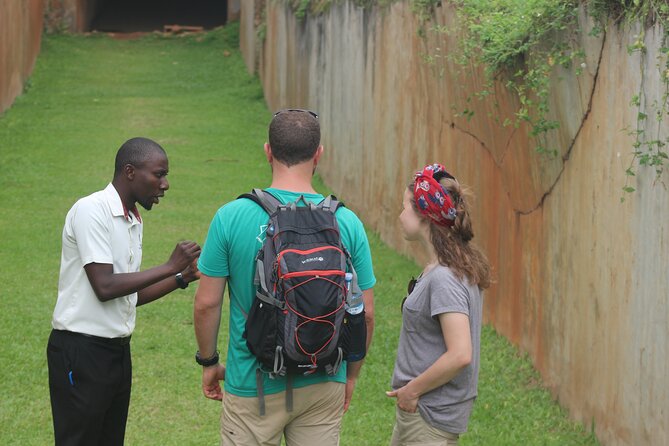
The Torture Chambers offer the most sobering part of the route. The name alone signals that this is not a light sightseeing stop. The site provides a way to confront political violence and painful chapters in Uganda’s past.
I would approach this visit with patience. The experience may be emotionally heavy, and the meaning depends greatly on the explanation you receive. Ask your guide for the historical context rather than treating the chambers as a quick stop for photographs.
This part of the tour is valuable because cultural sightseeing should not show only royal traditions, food, and crafts. Uganda’s past includes suffering as well as ceremony. A good explanation can help you understand how places of power were also used in damaging ways.
The tour details do not state a separate admission price for the Torture Chambers. Since all entrance fees are excluded, ask about the current total before the day begins.
Kabaka’s Lake and Kampala’s outdoor view
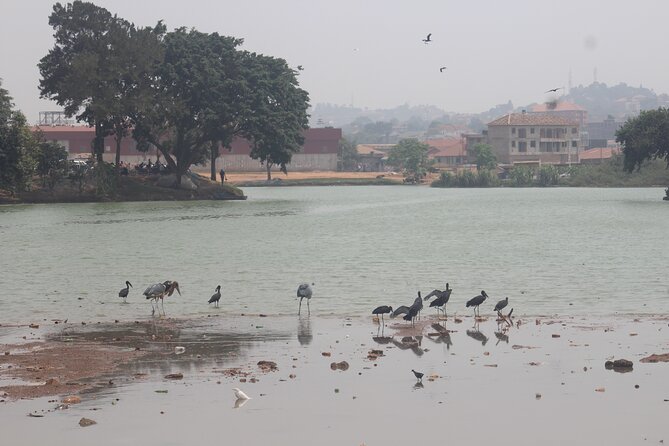
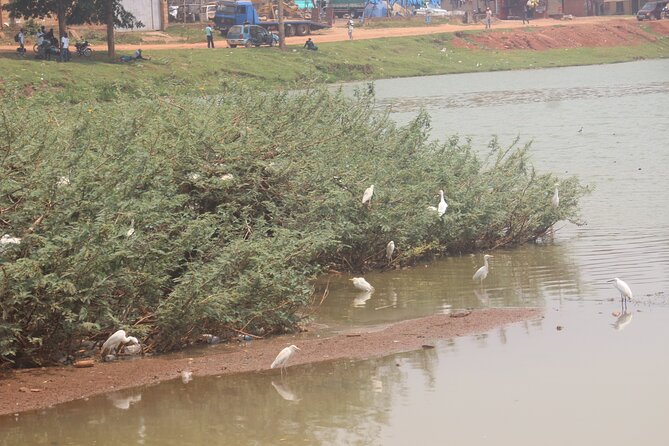
Kabaka’s Lake gives the itinerary a change of pace. After royal buildings and museum displays, you have a chance to see one of Kampala’s well-known cultural landmarks in an open setting.
The lake is linked to the Buganda royal story and is included as part of the kingdom-focused route. Your guide’s commentary is especially useful here because the importance of the lake may not be obvious from a short stop alone.
Do not expect this to be a long nature outing. The supplied details do not promise a boat trip, extended walk, or particular wildlife. Think of it as a cultural landmark and a chance to see another side of Kampala between indoor and historical stops.
Craft markets, food, and everyday culture
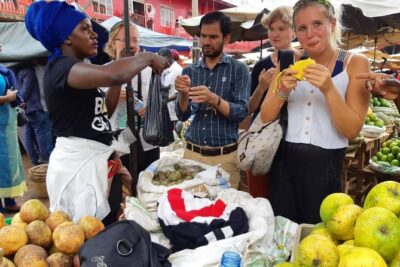
The craft market brings the tour closer to present-day life. Here you can browse traditional crafts and look for souvenirs rather than only listening to history. The itinerary also refers to craft making, so you might see how some items are produced.
Shopping takes a little judgment. Compare prices, ask about materials, and buy something because you like it, not just because it is presented as traditional. Your guide can help explain what you are seeing, but the tour does not promise fixed prices or a particular shopping allowance.
The local lunch is another strong part of the day. It is included in the $100 price, along with bottled water, so you do not need to arrange a separate midday meal. The exact dishes are not specified, and you should not assume a particular menu. Still, eating traditional food gives the tour a more direct connection to local life than stopping at a generic restaurant.
The itinerary also mentions storytelling and spiritual healing. Those elements suggest that the day is intended to cover living customs, not only old buildings. The details are not guaranteed as separate demonstrations, so treat them as possible parts of the cultural program rather than fixed performances.
What the $100 price really buys
At $100 per person, this is not Kampala’s cheapest way to see a few landmarks. The price makes more sense if you place a value on transport, planning, a guide, lunch, and a focused cultural route.
You receive round-trip pickup, private transportation, bottled water, and lunch. A small group of no more than 10 people can also make it easier to ask questions and adjust the conversation to your interests. If you are staying in Kampala for only a short time, the time saved may justify the cost.
The weak point is that admission is extra. One reported visit involved a $10 entry charge for a site described as mainly trees and a $20 fee for a former king’s house that seemed empty. Those amounts may change, but the broader lesson remains: budget beyond the advertised tour price.
I would ask these questions before setting out:
- Which sites are open today?
- What is the current admission fee at each stop?
- Which palace building or grounds does the fee cover?
- What happens if the Uganda Museum is still closed?
- Are all planned stops included if time runs short?
The operator does not control fees set by the destinations, but clear explanations still matter. You have a right to know what each payment covers.
Transport, group size, and the seven-hour schedule
The seven-hour duration is long enough for a proper overview without turning into a multi-day commitment. Pickup is offered, and private transportation removes the need to navigate between sites yourself.
Kampala traffic can make a schedule feel less predictable. The tour description gives an approximate duration, so you should keep the rest of your day flexible. If you have a flight, business appointment, or fixed evening booking, do not place it too close to the tour’s expected end.
A maximum of 10 participants is a useful middle ground. You get more personal attention than on a large bus, while still sharing the cost of transport. The description calls it a small-group experience, though the inclusion of private transportation means the vehicle arrangement may depend on the final group size.
Most people can take part, and the tour is near public transportation. Pickup is still the easier choice if you are unfamiliar with Kampala. It saves time and keeps the day organized around the cultural stops.
Who will get the most from this tour
I would recommend this experience to a first-time Kampala visitor who wants a guided introduction to Buganda culture. It is also a good fit if you prefer a planned day, want lunch included, and would rather not negotiate transport between several scattered locations.
History-minded visitors will appreciate the range. You see royal sites, a museum, a burial ground, a difficult memorial site, a lake, and a market. Food and craft activities add a social side to the day.
It may be less suitable if you want a relaxed city drive with no extra fees. The palace access issue and the possible museum closure are real considerations. You may also prefer arranging individual visits if you want to spend a long time at one location rather than follow a set seven-hour route.
The experience has a 4.9 rating from 17 reviews, with 94 percent recommending it. That is a strong signal, though the small number means you should still read the practical details closely, especially admission costs and museum status.
Booking and cancellation in plain terms
Confirmation is provided when you book. Free cancellation is available if you cancel at least 24 hours before the local start time.
Changes or cancellations within 24 hours are not accepted for a refund. Since the museum’s status and site access can affect the day, I would confirm the current itinerary as early as possible rather than waiting until the last minute.
Should you book Kampala cultural tours?
Book it if you want a well-organized introduction to Buganda, with transport, lunch, and a guide handling the route. Kasubi Tombs, the Royal Mile, Kabaka’s Palace, Kabaka’s Lake, the Torture Chambers, the Uganda Museum, and the craft market create a broad day of sightseeing.
Before paying, confirm which sites are open and set aside money for entrance fees. If you accept that the palace experience may be limited and that museum access can change, the tour offers solid value for a first visit. If you want guaranteed access to every building or dislike surprise charges, arrange a shorter private visit with admission details confirmed in writing.
FAQ
How long does the Kampala cultural tour last?
The tour lasts approximately 7 hours.
Does the tour include pickup?
Yes. Pickup is offered, and round-trip transportation from your hotel is included in the experience.
How many people can join the tour?
The tour has a maximum of 10 participants.
Is lunch included?
Yes. Lunch and bottled water are included.
Are entrance fees included in the $100 price?
No. Entrance fees are not included, so you should budget extra for the sites you enter.
Which major cultural sites are included?
The route includes Kasubi Tombs, the Uganda Museum, Kabaka’s Palace, the Royal Mile, the Torture Chambers, Kabaka’s Lake, and a craft market, along with cultural activities and local food.
Can I cancel for a full refund?
Yes, if you cancel at least 24 hours before the experience start time. Cancellations made less than 24 hours in advance are not refundable.
Just added around Kampala
- 4-Day QENP, Gorillas in Bwindi and Lake Bunyonyi relaxation★ 5.0 · 3 reviews
- 3 Days Murchison Falls Wildlife Safari★ 4.5 · 3 reviews
- 3 Days Private Tour in Murchison Falls National Park★ 5.0 · 3 reviews
- 2Days Murchison Falls NP Safari★ 5.0 · 3 reviews
- 2-Day Wildlife Safari in Lake Mburo National Park★ 5.0 · 3 reviews
- Kampala: Female-Guided Walking Tour★ 3.7 · 3 reviews
- From Kampala: Ziwa Rhino Sanctuary Day Tour with Lunch★ 4.7 · 3 reviews
- Entebbe kampala airport transfers★ 5.0 · 3 reviews
Kampala City Tours, compared.
Kampala Walking Tour (3 Hours) with Optional Gaddafi Mosque Visit
Read our review →
Browse the lists this tour appears in