
Reviewed · FOOD & DRINK
Kampala: Three-Hour Food Tour
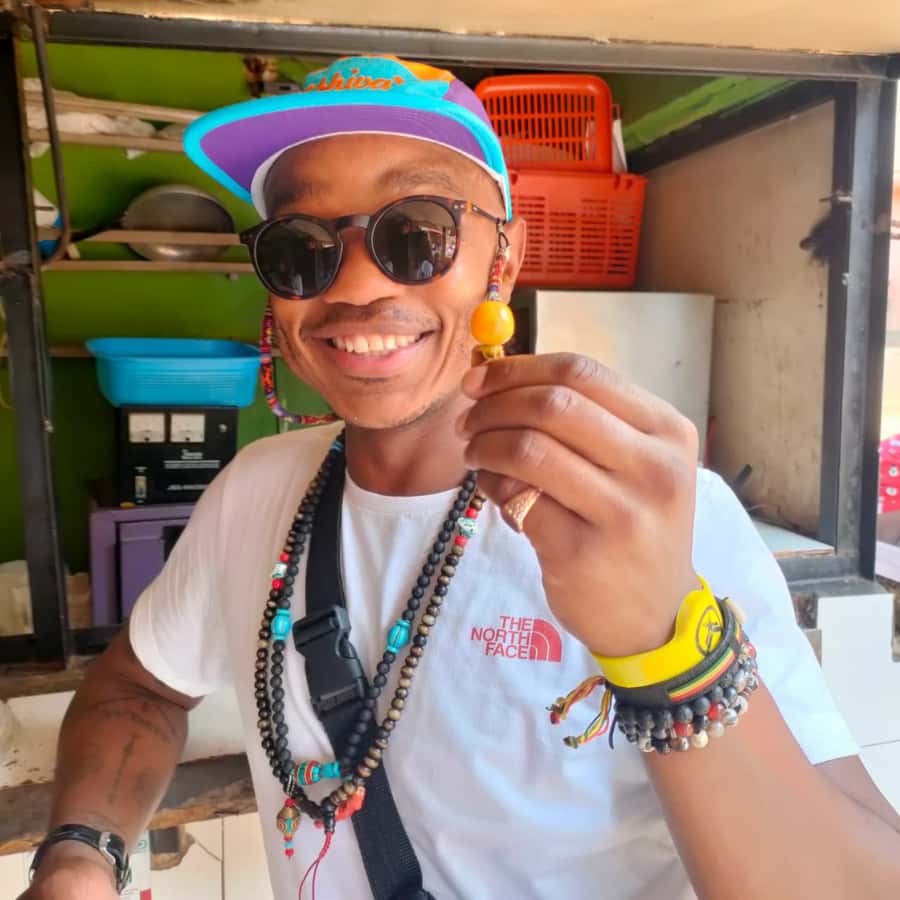
Kampala tastes best one bite at a time. This three-hour food tour takes you from a neighborhood cafe to Kamwokya Market, a local grill, and a generous restaurant meal, with plenty of stops between. I like the freshly made rolex and the chance to watch street vendors prepare food in front of you. I also like the market fruit tasting, where passion fruit, mango, pineapple, melons, and other seasonal produce bring a cool break to the walk.
The main consideration is that this is a working-class food outing, not a polished restaurant crawl. Roads, market paths, and transport can feel rough around the edges. A past booking also raised concerns about the promised boda rides and the meal drinks, so I would confirm those details with your guide at the start. The food is the star, but the experience depends on clear communication.
In This Review
- Key points to know before you book
- Starting at Cafe Javas in Kawokya
- Ugaroll and the Kampala rolex
- Fruit and snacks inside Kamwokya Market
- Watching Kampala’s street cooks at work
- Roast meat at the local grill
- The 15-minute boda ride to the final meal
- A generous restaurant spread of Ugandan staples
- Is $71 a fair price?
- Who will enjoy this three-hour food tour?
- Should you book it?
- FAQ
- Where does the Kampala food tour meet?
- How long does the food tour last?
- What food is included?
- Is transport included?
- How long is the boda ride?
- Are vegetarian options available?
- Are halal options available?
- What languages can the guide speak?
- Are drinks included?
Key points to know before you book
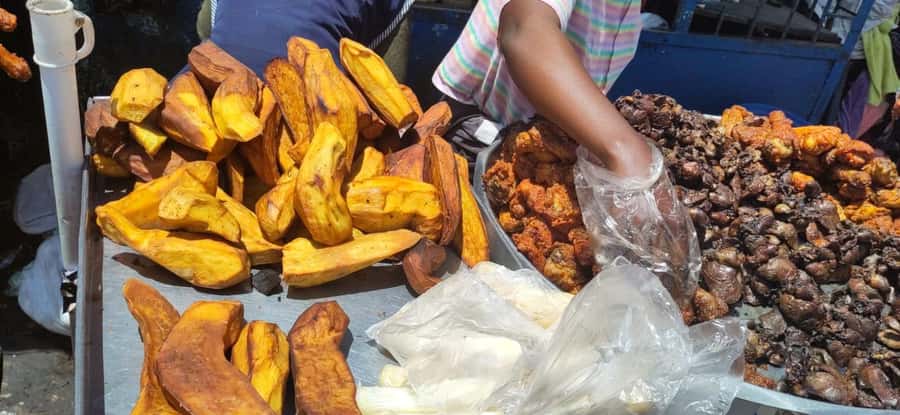
- The first rolex comes from Ugaroll: This popular Ugandan street dish is prepared fresh at a cafe in Kawokya.
- Kamwokya Market supplies the small bites: Expect in-season fruit, samosas, sesame cakes, and another chance to try rolex.
- You watch food being made: The tour gives you a close look at the people who feed Kampala’s working population.
- The final meal is large: Smoked tilapia, beef in peanut sauce, chicken cooked in banana leaves, and other local staples arrive as a generous spread.
- A boda ride links the route: The package includes transport by motorbike taxi to the last stop and back to the starting point.
- Andrew and Ronald receive strong praise: Their warmth, food knowledge, humor, and care with explanations are a major part of the experience.
Starting at Cafe Javas in Kawokya
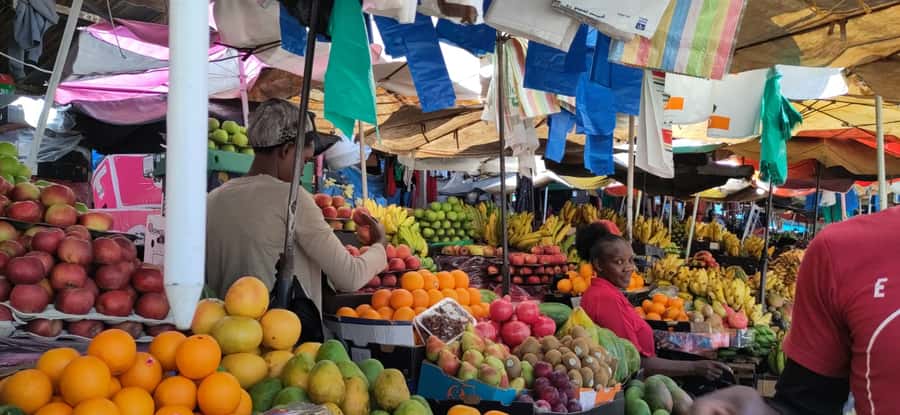
You meet your guide at the entrance of Cafe Javas, then begin mid-morning in Kawokya, a food-focused suburb of Kampala. This starting time works well for a food tour because the route can build from breakfast-style snacks to a full local lunch.
The tour is led in English, German, or French. Andrew receives especially warm praise for explaining dishes, local life, and cooking methods while making sure people feel comfortable. Ronald, also called Roland in one account, is praised for his humor and for offering the experience in fluent German.
I would use the first few minutes to tell your guide about dietary needs and expectations. Vegetarian and halal choices are available at every stop, which makes this outing easier to recommend to mixed groups. You should also ask when the boda rides will happen, since one past participant felt the included transport was not clearly offered.
The tour is described as taking place in Kampala, although the supplied location is listed as Mityana District. Since the meeting point and named stops are in Kampala, confirm the exact meeting details and route when booking. That small check can prevent a needless morning of confusion.
More food tours in Kampala:
- Cooking Class for Typical Ugandan Food in Kampala
★ 5.0 · 25 reviews - Nighttime Boda Boda Street Food Tour
★ 5.0 · 6 reviews - Private Ugandan Food Cooking Class and Culture Experience
★ 5.0 · 6 reviews
Ugaroll and the Kampala rolex
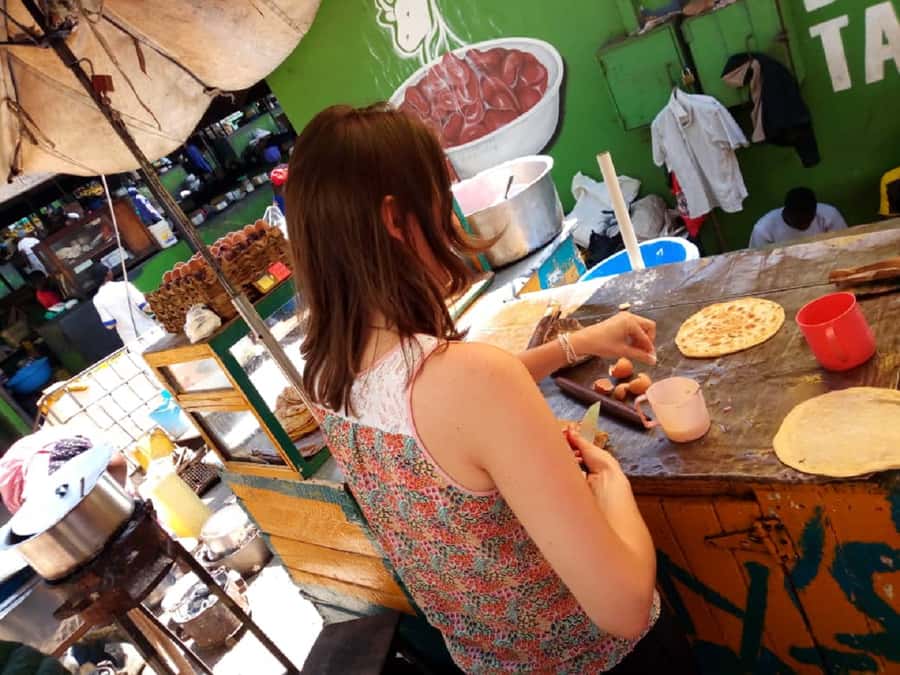
The first food stop is Ugaroll, a cafe known for its rolex. The name can sound grand, but the food is simple and filling: a chapati wrapped around an egg-based filling, prepared fresh while you watch.
This is one of the best parts of the tour because you are not simply handed a sample from a tray. You see the vendor work, watch the food take shape, and get an explanation from your guide about how the dish fits into daily life. The cooking process is part of the attraction.
The rolex is often the first clear sign that Ugandan food is built for people who need something tasty, quick, and substantial. It is street food with real staying power. If you arrive hungry, this stop can feel like breakfast and a lesson in local food culture at the same time.
You may also taste another rolex later in the market. That repeat is useful rather than wasteful: a cafe version and a market version can show you how the same popular food appears in different settings. You will want to pace yourself, though. The final restaurant meal is not a small tasting plate.
Fruit and snacks inside Kamwokya Market
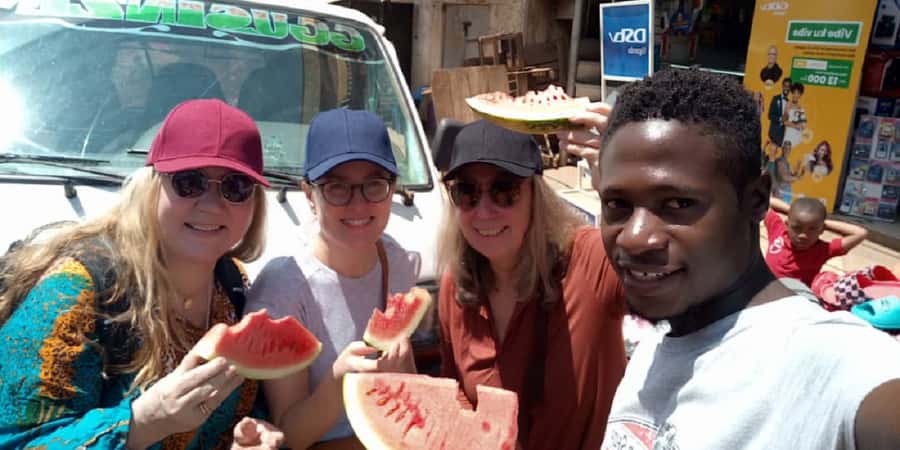
From Ugaroll, the route continues to Kamwokya Market. Here the focus shifts from cooked food to produce and quick market snacks.
The fruit selection follows the season. You may taste passion fruit, mango, pineapple, melons, and other local produce. This is a simple stop, but it gives the meal a fresh rhythm. After a hot chapati and egg dish, cool fruit helps reset your appetite.
I especially like the way this part connects food with the market itself. You are not tasting fruit in a hotel or a prepared tasting room. You are seeing the setting where people shop and where food vendors gather. Your guide can help explain the produce and answer questions about cooking, eating habits, and local ingredients.
The market also provides several savory bites. Samosas and sesame cakes are included, along with more rolex. Sesame cakes offer a sweet, nutty change from the fried and savory snacks. Samosas bring another crisp, handheld option.
Do not expect a neat sequence with long pauses between courses. This is a walk through a real market, with food appearing as you move. Paths may be crowded or uneven, and you will want comfortable shoes. The tour description does not specify group size, so I would ask about that if you prefer a quieter, slower outing.
Watching Kampala’s street cooks at work
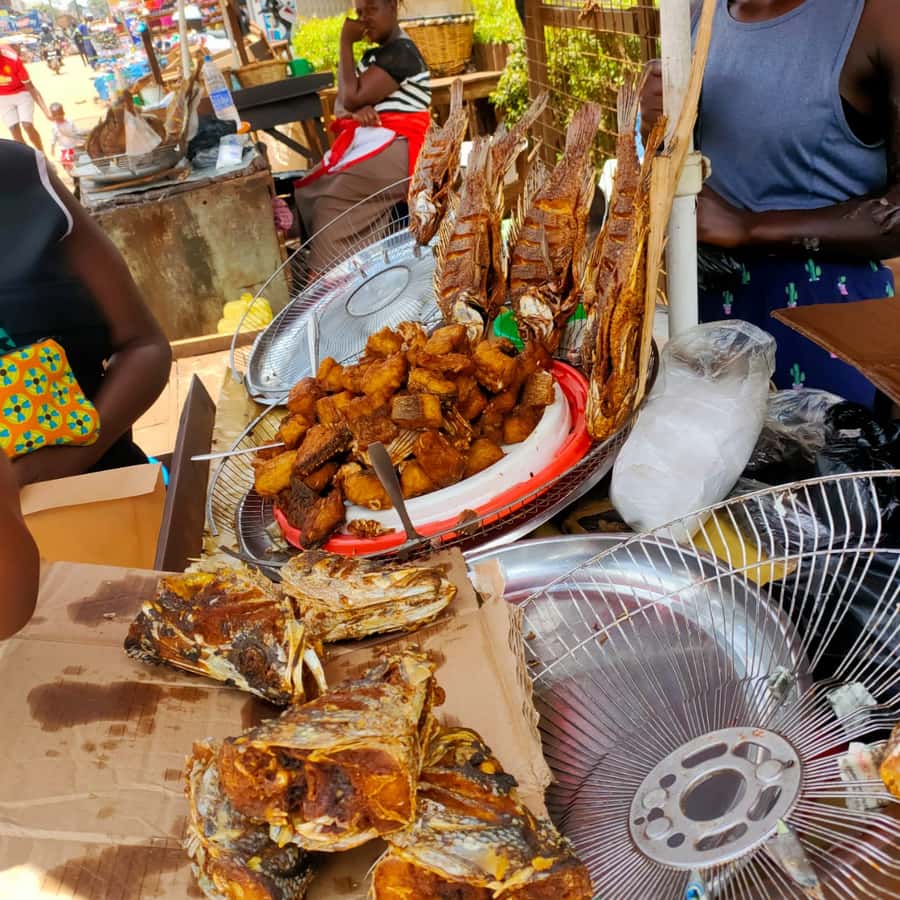
The strongest idea behind this tour is the connection with the people preparing the food. You see vendors cook in front of you instead of treating Kampala as a backdrop for a set menu.
That matters because the food is tied to workday routines. Samosas, rolex, roast meat, fruit, and sesame cakes are not presented as rare delicacies. They are ordinary foods made well, sold quickly, and eaten by people moving through the city.
Your guide adds the context that makes each taste more useful. Andrew is praised for discussing the origins of Ugandan dishes, cooking, fruit, and the wider food culture. He also received credit for sharing practical observations about local life rather than reciting a short list of facts.
This is where the tour can feel most personal. You are likely to ask questions as you go, and the guide’s attitude matters. Andrew’s friendly manner and attention to comfort were repeatedly praised. Ronald is also described as warm, funny, and eager to make the day memorable.
The experience is not built around formal culinary instruction. You will not be given a detailed recipe class or a professional kitchen demonstration. Instead, you get a moving introduction to everyday Kampala food, with explanations from someone who knows the area.
A few more Kampala trips worth weighing up
- Fishing Village Food Tour & Luwombo Stop
★ 5.0 · 3 reviews
Roast meat at the local grill
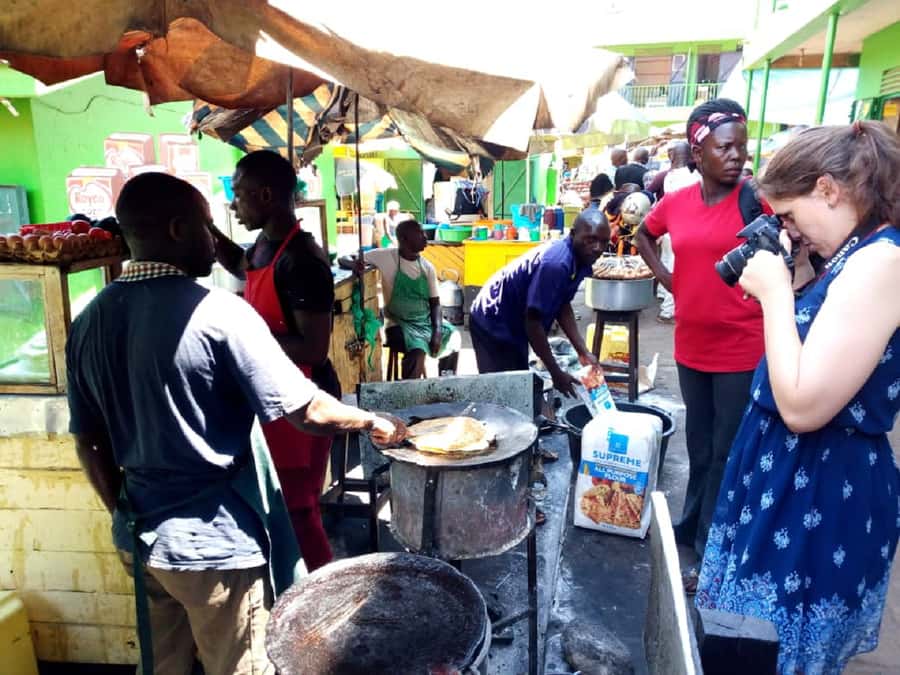
The next stop is a local grill for Uganda’s most popular roast meat. The supplied details do not name the cut or specify the exact cooking method, so your guide will be the best person to ask what you are eating and how it is seasoned.
This stop gives the route a stronger savory center. You have already sampled fruit and snacks, but roast meat changes the scale of the meal. It is a chance to watch another food worker prepare something directly for customers, rather than tasting only finished dishes.
If you eat meat, this should be one of the more memorable stops. If you do not, vegetarian choices are available across the tour, so tell your guide early. The same applies to halal requirements.
Because the tour lasts only three hours, the timing may feel brisk. You are covering several food settings, and each one has its own pace. Try not to fill up at the early stops. The final restaurant meal is described as generous, and it is clearly intended to be the biggest part of the outing.
The 15-minute boda ride to the final meal
After the grill, you take a boda, or motorbike taxi, for about 15 minutes to the final restaurant. The ride is part of the route, not just a way to save time. It lets you move between neighborhoods while experiencing one of Kampala’s common forms of urban transport.
The package includes the boda ride to the last stop and the return journey to the starting point. One past booking raised a serious complaint: the rider said the promised transport was not offered until it was requested, and the return boda was not provided. That account also described confusion over the distance and the planned route.
I would not ignore that issue. Ask your guide directly: Where will we take the boda? Is the ride included both ways? Are we riding for the full planned section? Clear answers at the beginning should help avoid a disagreement later.
Motorbike taxis are not ideal for everyone. If you are uncomfortable on a boda, say so before the ride. The supplied information does not provide a car alternative, group size, helmet details, or an accessibility policy, so you should ask about those points if they affect your decision.
One participant specifically praised Andrew for helping them feel safe and comfortable during the boda ride. That is encouraging, but comfort will still depend on your own experience with motorbikes and city traffic.
A generous restaurant spread of Ugandan staples
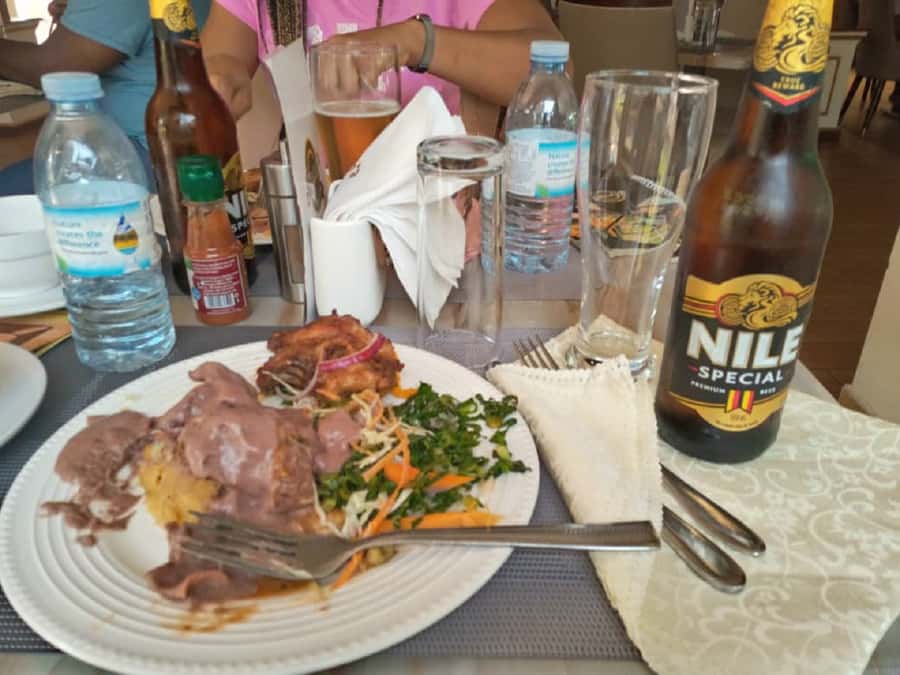
The final stop is a popular local restaurant where you sit down for a substantial meal. This is not just one main dish. You receive a broad spread of local staples, including smoked tilapia, beef in peanut sauce, chicken steamed in banana leaves, and other dishes.
For many people, this will be the highlight. The buffet-style meal lets you compare several flavors and textures without having to choose one unfamiliar dish from a menu. You can try a little of different foods, then return to the ones you like.
Smoked tilapia brings a pronounced fish flavor. Beef in peanut sauce offers a heavier, savory sauce. Chicken steamed in banana leaves adds a different cooking method and aroma. Together, these dishes show more range than a single restaurant entree would.
The meal also gives you time to sit, ask questions, and talk with your guide. Earlier stops are built around movement and quick bites. Here, you can slow down and make sense of what you have tasted.
Water and a soft drink are included with the final meal. Alcohol is not included. There was one past complaint about being offered water or a soft drink rather than both, and about a fruit bag being taken away by restaurant staff. I would keep personal bags close and confirm the included drinks when you sit down.
The final meal appears to be generous enough to leave you very full. That is good value if you enjoy trying several dishes, but it also means you should pace yourself from the first rolex onward.
Is $71 a fair price?
At $71 per person, this is not the cheapest way to eat in Kampala. Local snacks and restaurant meals can cost far less when purchased independently. One unhappy participant felt the tour was worth about half the price after transport and inclusion problems.
The price makes more sense if you value the guide and the structure. You are paying for several food stops, all listed tastings, bottled water, a soft drink at the final meal, and boda transport to and from the last stop. You are also paying for the confidence to enter markets and local food places with someone who can explain what you are seeing.
Andrew’s and Ronald’s strong marks for warmth, humor, language skills, and food explanations are important here. A good guide can turn a series of inexpensive dishes into a useful introduction to Kampala. Without that guidance, you could still eat the food, but you might miss the meaning behind it and feel less certain about what to order.
Value depends on your travel style. If you are happy finding cheap food on your own, $71 will feel high. If you have limited time, want to try many dishes, and prefer a local guide to handle the route, the price is easier to defend.
The free cancellation option up to 24 hours before departure and the reserve-now, pay-later policy reduce the booking risk. They do not solve the transport concern, so I would still confirm the details before setting out.
Who will enjoy this three-hour food tour?
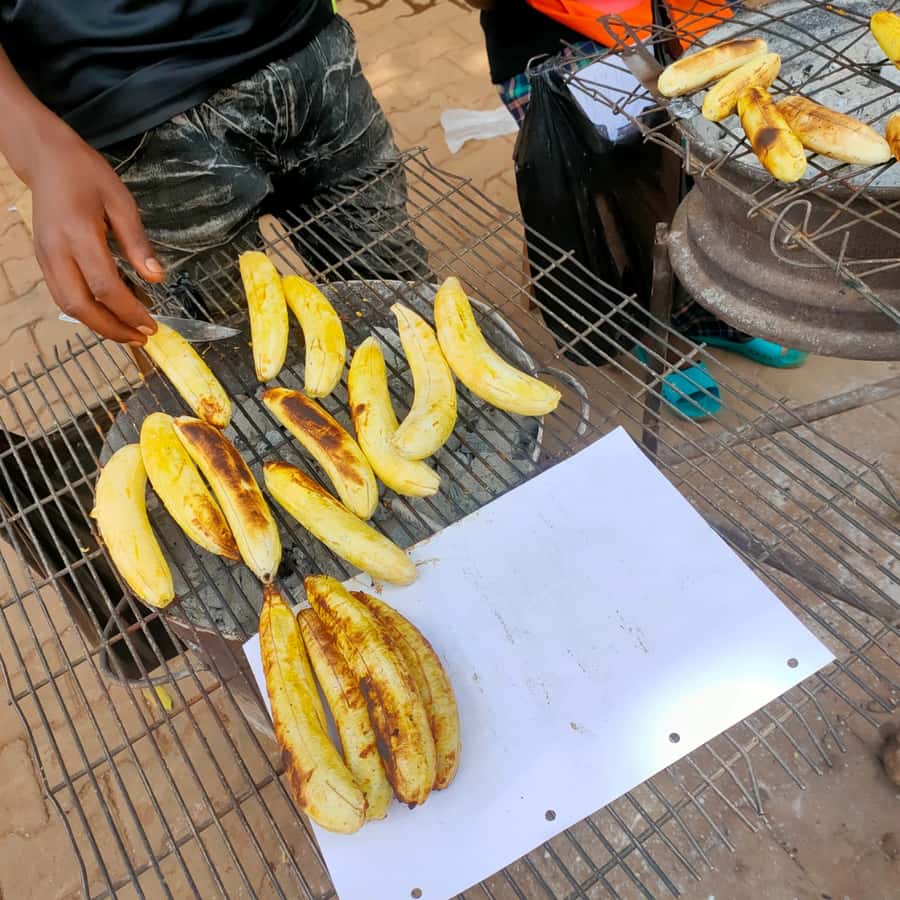
I would recommend this experience to you if you want food tied to ordinary city life rather than a formal dining room. It suits curious eaters who like asking questions, trying several small bites, and accepting that a market route may be noisy, crowded, or untidy.
It is also a good choice if you want a guide who can explain Uganda’s food culture in English, German, or French. Andrew is praised for his care and clear explanations, while Ronald receives strong credit for humor and German-language guiding.
You should think twice if you want a slow, polished tasting menu, a fixed restaurant setting, or very precise control over transport. The tour moves through working neighborhoods and depends on street vendors, market conditions, and communication between you and the guide.
Vegetarians and people seeking halal food can join, since those options are available at all stops. Still, tell the guide before the first stop so the food choices can be handled smoothly.
Should you book it?
I would book this tour if your main goal is to taste Kampala through its everyday food. The combination of rolex, seasonal fruit, market snacks, roast meat, and a large local meal gives you far more range than a single restaurant visit. The guide is the key value, and Andrew and Ronald are praised for making the route friendly, informative, and personal.
I would book with two simple questions ready: Will the boda ride be provided in both directions, and will I receive both the included water and soft drink? If the answers are clear, the tour offers a lively three-hour introduction to Kampala’s food culture. If you want the lowest possible food cost or dislike motorbike transport, spend the $71 elsewhere.
FAQ
Where does the Kampala food tour meet?
Meet your guide at the entrance of Cafe Javas in Kawokya.
How long does the food tour last?
The tour lasts three hours.
What food is included?
Included tastings include rolex, seasonal tropical fruit, samosas, sesame cakes, roast meat, smoked tilapia, beef in peanut sauce, chicken steamed in banana leaves, and other local staple dishes.
Is transport included?
Yes. Travel by boda is included to the final stop and for the return to the starting point.
How long is the boda ride?
The ride to the final stop takes about 15 minutes.
Are vegetarian options available?
Yes. Vegetarian options are available at all stops.
Are halal options available?
Yes. Halal options are available at all stops.
What languages can the guide speak?
Guiding is available in English, German, and French.
Are drinks included?
Bottled water and a soft drink are included during the large meal at the end. Alcoholic drinks are not included.
More 3-Hour Experiences in Kampala
- 3 Hours Guided Cycling Tour Across Lake Victoria
★ 5.0 · 151 reviews - Kampala Walking Tour (3 Hours) with Optional Gaddafi Mosque Visit
★ 5.0 · 112 reviews - Kampala: 3-Hour Walking Tour with Optional Gaddafi Mosque
★ 4.6 · 50 reviews - Entebbe Walking Tour (3 Hours) with Zoo and Botanical Gardens Options
★ 4.5 · 36 reviews
Just added around Kampala
- 4-Day QENP, Gorillas in Bwindi and Lake Bunyonyi relaxation★ 5.0 · 3 reviews
- 3 Days Murchison Falls Wildlife Safari★ 4.5 · 3 reviews
- 3 Days Private Tour in Murchison Falls National Park★ 5.0 · 3 reviews
- 2Days Murchison Falls NP Safari★ 5.0 · 3 reviews
- 2-Day Wildlife Safari in Lake Mburo National Park★ 5.0 · 3 reviews
- Kampala: Female-Guided Walking Tour★ 3.7 · 3 reviews
- Entebbe kampala airport transfers★ 5.0 · 3 reviews
- From Kampala: Ziwa Rhino Sanctuary Day Tour with Lunch★ 4.7 · 3 reviews
Food & Drink, compared.
Cooking Class for Typical Ugandan Food in Kampala
Read our review →
Private Ugandan Food Cooking Class and Culture Experience
Read our review →
Browse the lists this tour appears in