
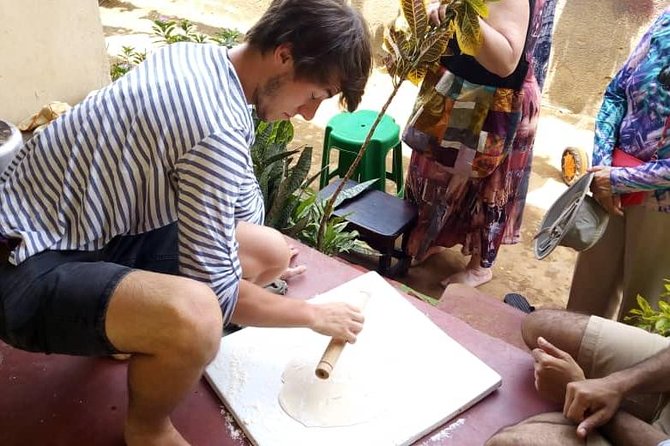
Reviewed · FOOD & DRINK
Cooking Class for Typical Ugandan Food in Kampala
A meal tells you plenty about a place. This four-hour Kampala cooking class brings you into Gertrude’s home kitchen, where you help prepare everyday Ugandan food rather than simply watching a chef work. I like the small group limit of 10, and I especially like the hands-on use of local ingredients and banana leaves.
You will peel, slice, cook, and eat together, with dishes such as matooke and groundnut sauce forming the heart of the meal. Gertrude and her son add warmth to the visit, with time for conversation, dancing, and stories. The main consideration is the meeting point in Nansana, outside central Kampala, and the food is entirely vegetarian.
In This Review
- Key things to know before booking
- A Kampala cooking class with a family welcome
- Four hours of peeling, slicing, and learning
- Matooke, plantains, and the taste of daily Uganda
- The groundnut sauce is a special reason to go
- Gertrude and her son make the class personal
- Small groups keep the lesson hands-on
- What the $32 price really covers
- Getting to Steve Residence in Nansana
- Who will enjoy this best?
- Practical tips for a better morning
- Should you book this Ugandan cooking class?
- FAQ
- How long does the cooking class last?
- How much does the experience cost?
- Where does the class begin?
- Where does the activity end?
- How many people can join the class?
- Is the food vegetarian?
Key things to know before booking
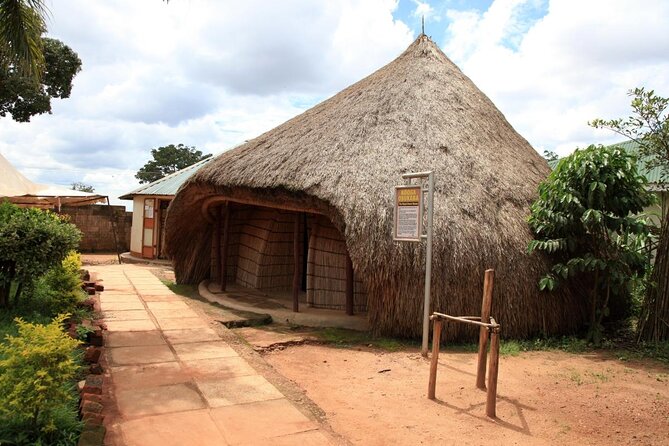
- Gertrude hosts the class at her home: This gives the morning a personal feel, with cooking, conversation, and family life sharing the same space.
- You work with familiar local staples: Cassava, yams, pumpkin, and plantains are peeled and prepared by hand.
- Matooke is part of the lesson: You learn about a classic Ugandan plantain dish and how it fits into a traditional meal.
- The meal is fully vegetarian: This is a good match for plant-based eaters, but not for anyone expecting meat or fish.
- The class is limited to 10 people: The small size should make it easier to ask questions and take part.
- You eat what you prepare: The workshop ends with a sit-down meal, including the much-praised groundnut sauce.
A Kampala cooking class with a family welcome
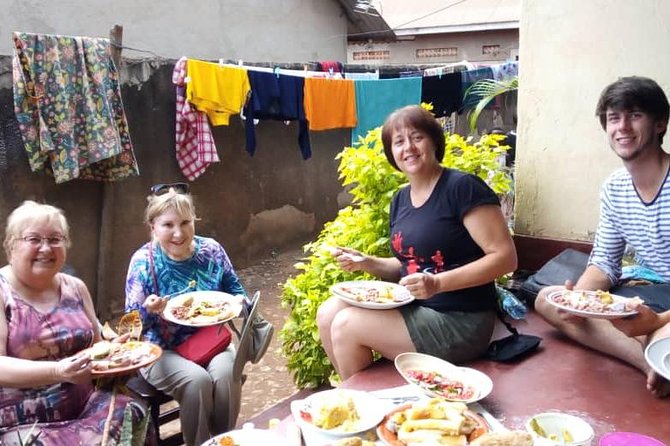
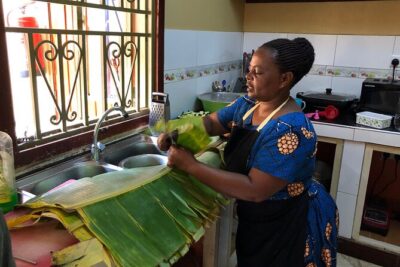
This class is less like a formal culinary school and more like being invited into a Ugandan home for a shared meal. You meet at Steve Residence on Little Muheji School Road in Nansana, then spend the session preparing food with Gertrude and her son.
That setting matters. In a restaurant kitchen, you might learn a recipe. Here, you also get a sense of how ingredients are handled at home, how food is prepared for sharing, and how cooking creates time for conversation. The atmosphere described by participants includes chatting, dancing, and exchanging stories, so you should expect a social morning rather than a quiet technical lesson.
Gertrude is praised for being warm, communicative, and generous with her time. One useful detail is that she has helped arrange transportation to her home when needed. Still, you should confirm pickup or transport arrangements before setting out, since the stated meeting point is the residence itself.
The address is in Nansana, which is near public transportation but not presented as a central Kampala attraction. Allow extra planning time for reaching the meeting point, especially if you are staying in another part of the city. The activity ends back at the same place, so your onward transport also starts there.
More food tours in Kampala:
- Kampala: Three-Hour Food Tour
★ 4.6 · 15 reviews - Nighttime Boda Boda Street Food Tour
★ 5.0 · 6 reviews - Private Ugandan Food Cooking Class and Culture Experience
★ 5.0 · 6 reviews
Four hours of peeling, slicing, and learning
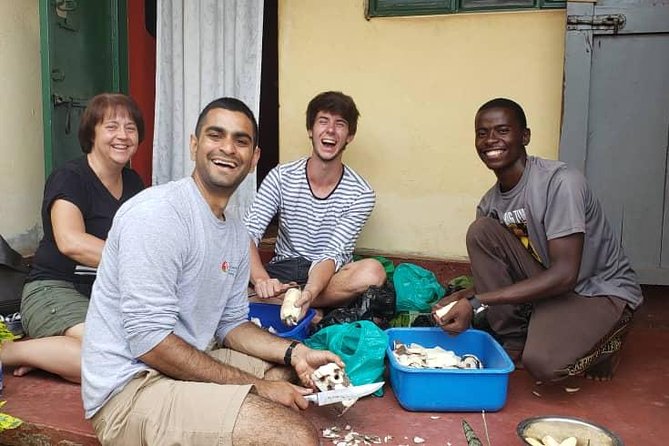
The class gives you a full half-day with the food, rather than a quick demonstration followed by lunch. The work begins with local produce, including cassava, yams, pumpkin, and plantains.
You can expect to peel and slice ingredients yourself. That may sound simple, but it is exactly the point. These are not decorative cooking tasks added to a tourist program. They are basic steps that help you understand the texture, preparation, and everyday use of staple foods.
The class description focuses on a start-to-finish process. You help prepare the ingredients, cook the dishes, and then sit down to eat. Since the group is capped at 10 people, you should have a better chance of taking an active role instead of standing behind a crowd.
The pace also seems suited to curious beginners. You do not need to arrive with advanced cooking skills. The value comes from learning how ingredients are processed and combined in a home setting, then trying the finished food while the method is still fresh in your mind.
One point to keep in mind is that the precise timetable and menu can vary. The experience promises typical Ugandan dishes and vegetarian staples, but it does not provide a fixed minute-by-minute schedule or a complete dish list. Think of it as a practical food workshop rather than a rigid recipe course.
Matooke, plantains, and the taste of daily Uganda
Matooke is one of the main reasons this class is useful for anyone interested in Ugandan food. The dish is made from plantains, and the workshop gives you the chance to see how they are handled as part of a larger meal.
You also learn about produce that may be less familiar at home. Cassava, yams, pumpkin, and plantains each bring a different shape, texture, and preparation method to the table. Working with them helps you understand Ugandan food in a way a restaurant menu cannot.
Banana leaves add another memorable detail. The class includes learning how food can be peeled, processed, and consumed in a traditional way using banana leaves. This turns serving and presentation into part of the lesson, not an afterthought.
The recipes are plant-based, so the meal may appeal strongly to vegetarians and anyone looking for a break from meat-heavy sightseeing meals. The limitation is just as clear: if you want to learn Ugandan meat dishes, this class will not meet that goal.
The groundnut sauce is a special reason to go
The groundnut sauce receives particular praise and sounds like one of the meal’s most satisfying elements. Groundnuts are peanuts, and the sauce adds a savory, nutty component to the vegetables and staples.
For you, this means the class is not only about learning separate recipes. It is also about seeing how a few simple components work together. A plain vegetable dish can become much more interesting when paired with a well-made sauce, and the meal gives you a chance to taste that balance directly.
You should also expect a generous social element around the food. Participants describe sitting down after the cooking, eating the meal they helped prepare, and talking with their hosts. That shared table is the natural payoff for the work.
I would not book this class if your only goal is to collect a printed recipe and leave quickly. The supplied details emphasize hospitality, local plants, traditional handling, and conversation. You will get more from it if you are willing to slow down and take part.
A few more Kampala trips worth weighing up
- Fishing Village Food Tour & Luwombo Stop
★ 5.0 · 3 reviews
Gertrude and her son make the class personal
A named host changes the tone of a food activity. Gertrude is not presented as a distant instructor delivering a scripted lesson. She welcomes people into her home and cooks alongside them.
Her son is also part of the experience. The family setting has been praised as friendly and relaxed, with time to chat and share stories. That makes this a particularly good choice if you prefer meeting local people over visiting another polished commercial venue.
The personal setting does bring a little unpredictability. A home class may feel informal, and the exact flow can depend on the group and the cooking itself. If you want a highly structured lesson with professional workstations and exact measurements, you may prefer a formal cooking school.
For most people, though, the informal setting is the main attraction. You are not just learning what goes into a dish. You are seeing food as part of family life and everyday hospitality in Kampala.
Small groups keep the lesson hands-on
The maximum group size is 10 people. That is small enough to make a real difference during tasks such as peeling, slicing, and preparing vegetables.
With a large class, it is easy to become a spectator. Here, you should be able to ask about unfamiliar produce, watch how each ingredient is handled, and contribute to the meal. The format also supports the conversational side of the visit.
The size may not be strictly intimate if all 10 places are filled, so you should not expect a private class unless that is specifically arranged. Still, the cap offers a better chance of direct contact with Gertrude than a large group tour.
The small-group format also helps explain the $32 price. You are paying for roughly four hours of instruction, food, a prepared meal, and personal hosting. That is stronger value than a short cooking demonstration, particularly if you plan to recreate the dishes at home.
What the $32 price really covers
At $32 per person, this is a midrange activity for a half-day in Kampala. The value is not in expensive equipment or a long list of restaurant courses. It comes from time, participation, food, and contact with a local host.
You help prepare the meal rather than simply eating it. You also receive context about native plants and traditional methods, including the use of banana leaves. Then you eat the finished dishes at the same home where they were prepared.
That combination makes the price reasonable for visitors who care about food and culture. It is less compelling if you only want an inexpensive lunch, since the class takes about four hours and requires getting to Nansana.
The experience is booked about eight days ahead on average. That suggests you should not leave it until the final morning of your Kampala stay if the timing matters. The small capacity can also make advance planning sensible.
The cancellation policy is straightforward. You can cancel at least 24 hours before the start time for a full refund. Changes or cancellations within 24 hours are not accepted for a refund. The activity also requires good weather, and a weather cancellation brings the choice of another date or a full refund.
Getting to Steve Residence in Nansana
The meeting point is Steve Residence, Little Muheji School Road, Nansana, Uganda. The activity finishes at that same meeting point.
The location is near public transportation, but the information does not specify a hotel pickup service as a standard feature. Contacting the provider before the day of the class is wise, especially if you need help finding the residence or arranging transportation.
The address is important because the experience is described as a Kampala activity, while Nansana sits beyond the city center. Do not assume that a short walk from a central hotel will get you there. Plan your route before the cooking starts so you arrive ready to participate.
Gertrude has been praised for communication and for helping arrange transport in at least one case. That is encouraging, but you should still confirm the exact meeting instructions after booking.
Who will enjoy this best?
I would recommend the class to you if you want to:
- Learn how Ugandan staples are prepared at home
- Eat a fully vegetarian traditional meal
- Spend time with a local family
- Take part in peeling, slicing, and cooking
- Try matooke, groundnut sauce, and other plant-based dishes
- Bring practical food ideas back to your own kitchen
It also suits people who enjoy a relaxed pace. Four hours gives the cooking room to unfold, with time for conversation and the final meal.
Families and couples may appreciate the friendly setting, while solo visitors can benefit from the social contact. The group limit of 10 keeps it manageable for anyone who wants to ask questions or meet a few other people without joining a large coach group.
I would be more cautious if you have a strict dietary requirement beyond vegetarian eating, since no other dietary information is provided. I would also choose another activity if you want a meat-focused Ugandan menu, a central city location, or a formal chef-led class.
Practical tips for a better morning
Confirm the meeting point and transport plan before the class. The activity begins and ends at Steve Residence, so you need a clear plan for both arrival and departure.
Wear clothes you can work in. The class involves handling and preparing produce, and the point is to participate rather than remain spotless on the sidelines.
Arrive ready to ask questions. The most useful lessons may come while you are handling unfamiliar ingredients, especially cassava, yams, plantains, and banana leaves.
Keep some time after the meal if possible. The social side is part of the appeal, and rushing away immediately would cut short the home visit.
If you hope to recreate the dishes, make notes as you go. The class teaches practical preparation, but the supplied information does not promise a printed recipe booklet. Pay attention to how ingredients are peeled, processed, cooked, and served.
Should you book this Ugandan cooking class?
Book it if you want a warm, hands-on introduction to Ugandan home cooking and do not mind traveling to a residential meeting point in Nansana. The strongest reasons are the personal welcome from Gertrude, the chance to work with local produce, the traditional use of banana leaves, and the sit-down meal afterward.
The $32 cost is fair for four hours of food, instruction, and hospitality, especially with a maximum of 10 participants. Just remember that the menu is vegetarian, transport to the meeting point needs attention, and poor weather can affect the schedule.
If those limits fit your plans, this is a thoughtful way to spend half a day in Kampala. You leave with more than a full stomach: you gain a better sense of how staple foods move from market produce to a shared family meal.
FAQ
How long does the cooking class last?
The class lasts approximately four hours.
How much does the experience cost?
The price is $32 per person.
Where does the class begin?
It begins at Steve Residence, Little Muheji School Road, Nansana, Uganda.
Where does the activity end?
The activity ends back at the meeting point at Steve Residence.
How many people can join the class?
The class has a maximum of 10 participants.
Is the food vegetarian?
Yes. The class prepares and serves purely vegetarian food based on traditional plant-based recipes.
More Cooking Classes in Kampala
- Like a local cooking Tours
★ 4.0 · 4 reviews
More Workshops in Kampala
- Kampala: Hands-On Chocolate Making Experience
★ 4.9 · 18 reviews
Just added around Kampala
- 4-Day QENP, Gorillas in Bwindi and Lake Bunyonyi relaxation★ 5.0 · 3 reviews
- 3 Days Murchison Falls Wildlife Safari★ 4.5 · 3 reviews
- 3 Days Private Tour in Murchison Falls National Park★ 5.0 · 3 reviews
- 2Days Murchison Falls NP Safari★ 5.0 · 3 reviews
- 2-Day Wildlife Safari in Lake Mburo National Park★ 5.0 · 3 reviews
- Kampala: Female-Guided Walking Tour★ 3.7 · 3 reviews
- From Kampala: Ziwa Rhino Sanctuary Day Tour with Lunch★ 4.7 · 3 reviews
- Entebbe kampala airport transfers★ 5.0 · 3 reviews
Food & Drink, compared.

Private Ugandan Food Cooking Class and Culture Experience
Read our review →
Browse the lists this tour appears in