Reviewed · TOURS
African Fabric Market Tour
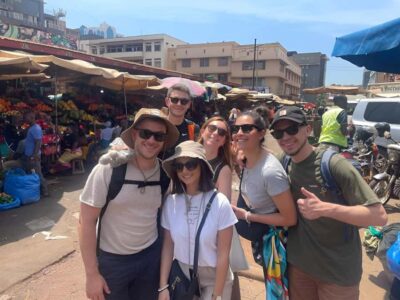
Kampala’s best souvenir may be wearable. This $13 private tour takes you through the Old Taxi Park and Owino Market with Yimba Fashions’ young designers, helping you choose Kitenge fabric for a custom outfit. I like the direct access to local fashion and the fact that the experience supports youth training. The main thing to check is the final clothing cost, since the listed price covers the tour but does not clearly state that fabric or tailoring is included.
I also like the small-group format. You get help in a market that can feel confusing at first, rather than wandering among dozens of fabric stalls alone. The two-hour time frame is short enough for a busy Kampala schedule, though it may feel tight if you need a finished outfit quickly.
In This Review
- Key points at a glance
- Why a fabric market is a smart Kampala experience
- Starting at Kampala Old Taxi Park
- Choosing Kitenge at Owino Market
- Sitting down with a Yimba designer
- What the $13 price really gives you
- Timing, group size, and getting there
- Who will enjoy this most
- Making the most of your fabric visit
- Should you book the African Fabric Market Tour?
- FAQ
- Where does the African Fabric Market Tour start?
- Where does the tour end?
- How long does the experience last?
- What places are included?
- Is transportation included?
- Is this a private tour?
- What is included in the price?
- What is the cancellation policy?
Key points at a glance
- Kampala’s Old Taxi Park: Get a brief overhead view of the city’s organized transport chaos before entering the market district.
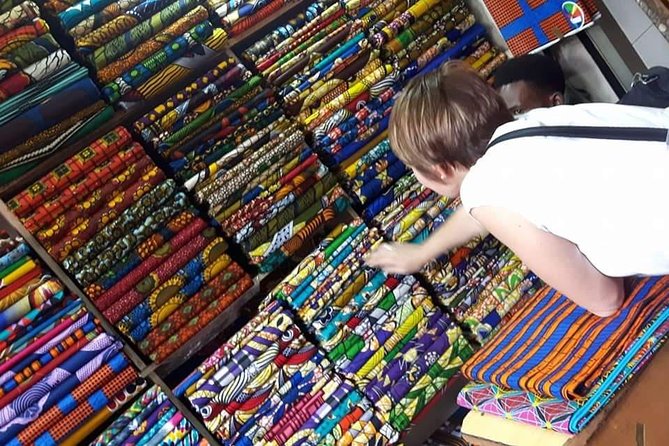
- Owino Market fabrics: Spend about 40 minutes comparing Kitenge patterns, colors, and weights for your clothing order.
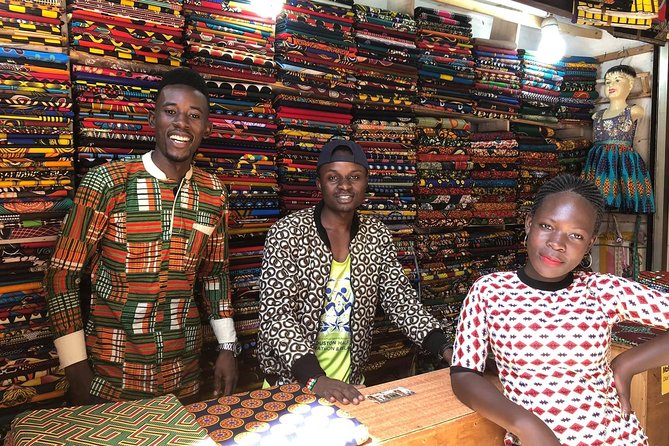
- Design help from Yimba Fashions: Work with local fashion designers who can guide your fabric choice and shape a custom dress, suit, or other garment.
- A private experience: Only your own group takes part, which makes it easier to ask questions and discuss a personal design.
- Youth-focused spending: Profits go toward training and supporting young Ugandan artisans.
- Simple meeting point: Start and finish at Standard Supermarket, Mega Aponye Branch, on Burton Street.
Why a fabric market is a smart Kampala experience
Many city tours give you something to look at for an hour, then send you home with a photograph. This one can give you a piece of clothing made from a design you helped choose. That makes the experience more personal, especially if you want a souvenir with a daily use rather than another carved object or printed shirt.
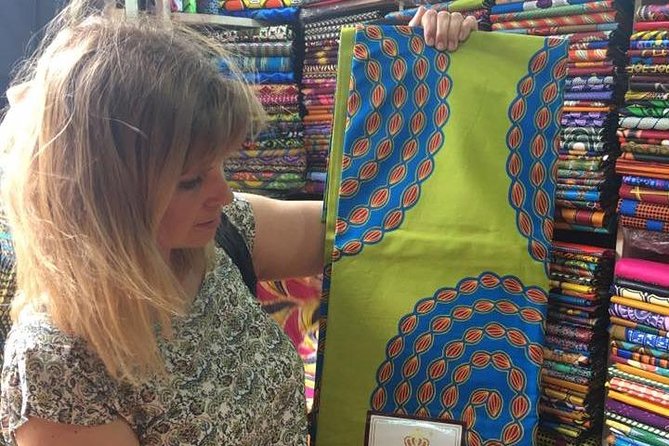
Kitenge fabric is sold in bold colors and repeating designs. You may see patterns suited to dresses, jackets, shirts, skirts, suits, or performance clothing. The important point is that you are not simply handed a preselected product. You browse, compare, and decide what fits your taste.
Yimba Fashions adds a practical layer to the visit. Their designers help you navigate the market and choose fabric at local prices, then discuss how that material can become a finished garment. This matters because fabric markets can be difficult to read if you do not know the usual quality, pricing, or yardage needed for a particular item.
The experience also has a clear social purpose. Yimba Fashions directs 100 percent of its profits into training and empowering more young people. You should still judge the tour by its quality and price, but that model gives your spending a direct connection to local fashion skills.
Other Kampala trips people book alongside this one:
- 3 Hours Guided Cycling Tour Across Lake Victoria
★ 5.0 · 151 reviews - Kampala’s Best Experience walking tour
★ 5.0 · 137 reviews - 3 Days gorilla trekking Safari tour in Uganda
★ 5.0 · 121 reviews
Starting at Kampala Old Taxi Park
The tour begins at Standard Supermarket, Mega Aponye Branch, on Burton Street. From there, the first stop is Kampala Old Taxi Park, where you get about 10 minutes to see the city’s public transport system from above.
This is a quick orientation rather than a long sightseeing stop. The taxi park is known for movement, noise, and a large number of minibuses operating in a tightly packed urban setting. From a higher viewpoint, you can take in the pattern of vehicles and people without being dropped straight into the middle of it.
I see this stop as useful context. Kampala’s downtown energy can be startling if you are new to the city, and the taxi park gives you an early look at how residents move around. It also makes the market visit feel connected to daily Kampala rather than separated from it for tourist convenience.
Ten minutes is not enough for detailed photography, transport research, or a long explanation. If you hope to study the taxi system at length, this will feel brief. For most people, though, the short stop works as a fast introduction before the main fabric shopping begins.
Choosing Kitenge at Owino Market
The core of the experience takes place at Owino Market, also called St. Balikuddembe Market. You spend about 40 minutes moving among fabric sellers and comparing the large selection of Kitenge cloth.
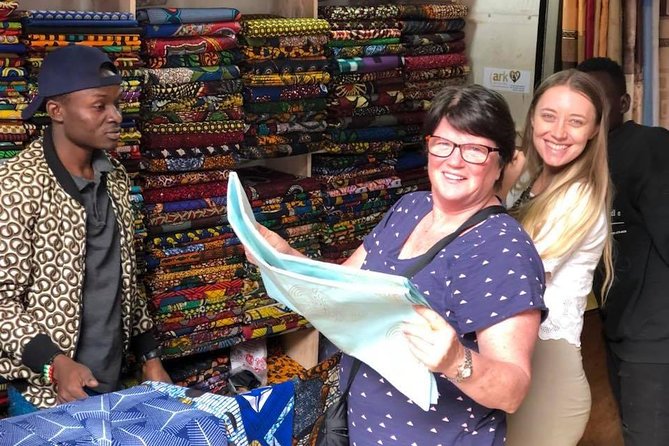
This is where the help of a local designer becomes especially useful. You can point to colors and patterns you like, explain the kind of clothing you want, and get advice on which fabric suits that design. If you arrive with only a general idea, such as a work outfit or a dress for a special occasion, the Yimba team can help narrow the choices.
You might find yourself comparing prints that look similar from a distance but feel quite different in person. The market setting lets you see the fabric directly instead of choosing from a small shop display. That is part of the fun, but it can also be tiring if you dislike crowded commercial areas or find many options overwhelming.
The 40-minute window should be enough for a focused purchase with guidance. It may not be enough if you want to inspect every stall, bargain at length, and design several outfits. Go in with a rough plan. Decide if you want a dress, suit, shirt, skirt, or another garment before you arrive, then let the designers help with the details.
One useful point comes from the way the experience has been used by past customers: Kitenge does not have to mean a full African-print outfit. One person arranged custom clothing that was not entirely African print and could be worn casually to work in Australia. That is a helpful reminder to discuss fabric placement, lining, panels, or a mixed-fabric design if a head-to-toe print feels too bold.
Another customer used the service for performance wear. This suggests you can ask about a more unusual design rather than limiting yourself to standard clothing. The available information does not promise a particular technical fabric or construction, so explain your needs clearly and confirm what the tailor can make.
Sitting down with a Yimba designer
After you choose your fabric, you sit with a Yimba designer to develop your custom clothing. The experience description lists dresses, suits, and entirely personal designs as examples, but the exact tailoring process and collection date are not provided.
That missing detail is worth clarifying before you book if you are staying in Kampala for only a few days. The tour lasts roughly one to two hours, but that does not mean the finished garment is completed during the tour. Treat this as the fabric-selection and design stage unless Yimba Fashions confirms a different arrangement.
This part may be the most valuable for anyone who feels unsure about fashion design. You can bring a reference image or describe the look you want, then discuss how it might work with the chosen Kitenge. The private format helps here because you are not competing for the designer’s attention with a large group.
The available information names Veronica and Anne Marie as particularly helpful guides for navigating the market. Depending on the booking, your own team may differ, but you can request experienced assistance when discussing your fabric and design.
Do not be shy about practical details. Tell the designer how often you plan to wear the outfit, if it needs to work in a professional setting, and if you prefer a subtle or dramatic print. A good fabric choice depends as much on the intended use as on the color.
A completely different sort of trip out of Kampala:
- Lake Victoria Island Cycling Tour from Kampala
★ 5.0 · 120 reviews - Kampala Walking City Tours (Women Guided)
★ 5.0 · 115 reviews - Kampala Walking Tour (3 Hours) with Optional Gaddafi Mosque Visit
★ 5.0 · 112 reviews - Steve Kampala Walking tours (Airpals Safaris tour)
★ 5.0 · 89 reviews
What the $13 price really gives you
At $13 per person, this is an inexpensive guided introduction to Kampala’s fabric trade. The strongest value comes from the local assistance, private format, and design conversation. If you tried to find Owino Market fabric and negotiate the process alone, you might spend less, but you would also take on the work of finding the right stalls and understanding what you are buying.
The tour includes gratuities and bottled water. Private transportation is not included, so you need to make your own way to Standard Supermarket on Burton Street. The activity ends back at that meeting point.
The price appears to cover the experience itself, not clearly the fabric or completed garment. Before booking, ask Yimba Fashions:
- Is fabric purchased separately?
- Is tailoring included in the $13?
- How much should you budget for the chosen outfit?
- Where and when will you collect the finished clothing?
- Can the designer make a mixed-print or nontraditional design?
These are not minor questions. A $13 tour can be excellent value, but the total cost depends on the fabric and garment you order. Confirming the details prevents a pleasant market visit from becoming a budget surprise.
Timing, group size, and getting there
The activity lasts approximately one to two hours. The listed stops account for about 50 minutes, leaving the rest of the time for walking, choosing cloth, and discussing your design. Market conditions and the amount of help you need may affect the pace.
Because this is a private activity, only your group participates. That is a strong advantage if you want to ask basic questions, take time with color choices, or discuss a personal size and style. It also means the tour is not built around a large group’s shared schedule.
You will need to reach the meeting point independently. The location is near public transportation, but private transportation is not included. Plan extra time for getting to Burton Street, particularly if you are unfamiliar with central Kampala.
A mobile ticket is provided, and confirmation is normally received at booking. If you book within two days of the activity, confirmation can take up to 48 hours and remains subject to availability. That makes early booking sensible, especially since this experience is commonly reserved well ahead of time.
Who will enjoy this most
I would recommend the tour to anyone who wants a useful, personal souvenir and is comfortable making choices in a busy market. It is also a good fit if you are curious about Ugandan fashion but do not know how to begin.
Fashion students, designers, performers, and anyone interested in local clothing production may get extra value from the visit. You can see how fabric choice connects with an eventual garment, rather than treating cloth as a simple retail purchase.
The experience suits most participants, and service animals are allowed. Still, you should be comfortable walking through a crowded market environment and handling a fast-moving downtown setting. The activity is short, but the market itself may feel intense if you prefer quiet shops and slow browsing.
It is less suitable if you need a finished outfit immediately and cannot arrange a later fitting or collection. It is also not ideal if you want a long historical tour of Kampala. The main focus is fabric, design, and practical shopping help, with only a brief city orientation.
Making the most of your fabric visit
Arrive with a clear idea of the clothing you want. A simple note on your phone with examples of dresses, jackets, suits, or workwear can make the design conversation easier. You do not need a final design, but a starting point will help you use the short market visit well.
Ask to see options rather than choosing the first attractive print. Kitenge designs can look very different once made into sleeves, collars, skirts, or panels. Consider how much of the print you want visible and if you prefer a more restrained design for regular use.
Think about your wardrobe at home. A full-print outfit may be striking, while a Kitenge collar, skirt panel, jacket, or shirt can be easier to wear often. The experience can support both approaches, and the designers may help adapt the fabric to your style.
Bring your measurements if you have them, but still confirm what the Yimba team needs. The supplied details do not explain the fitting system, alteration policy, or delivery timetable. Those points should be settled before you commit to a garment.
Finally, keep an open mind about the fabric. The best choice may not be the loudest pattern on the table. It may be the cloth that works with your intended cut, your usual clothing, and the setting where you plan to wear it.
Should you book the African Fabric Market Tour?
Book it if you want a short, private Kampala experience with a practical result. The combination of Owino Market, local design support, and youth training gives the tour more purpose than a quick shopping stop, and $13 is a fair price for guided access.
I would book with two conditions. First, confirm exactly what the $13 includes beyond the tour, especially fabric and tailoring. Second, allow enough time after the visit for the clothing to be made if you place an order.
If you want a quiet sightseeing walk, this is not the right choice. If you want to understand how local fabric becomes clothing and take part in the design, it is one of Kampala’s more personal ways to spend an hour or two.
FAQ
Where does the African Fabric Market Tour start?
The tour starts at Standard Supermarket, Mega Aponye Branch, on Burton Street in Kampala, Uganda.
Where does the tour end?
The activity ends back at the meeting point at Standard Supermarket, Mega Aponye Branch.
How long does the experience last?
The experience lasts approximately one to two hours.
What places are included?
The tour includes Kampala Old Taxi Park and Owino Market, where you select Kitenge fabric for a custom clothing order.
Is transportation included?
Private transportation is not included. The meeting point is near public transportation.
Is this a private tour?
Yes. Only your own group participates in the activity.
What is included in the price?
The listed inclusions are gratuities and bottled water. The information does not clearly state that fabric or the finished garment is included.
What is the cancellation policy?
You can cancel up to 24 hours before the start time for a full refund. Changes or cancellations made less than 24 hours before the start time are not accepted for a refund. If poor weather causes the activity to be canceled, you will be offered another date or a full refund.
Just added around Kampala
- 4-Day QENP, Gorillas in Bwindi and Lake Bunyonyi relaxation★ 5.0 · 3 reviews
- 3 Days Murchison Falls Wildlife Safari★ 4.5 · 3 reviews
- 3 Days Private Tour in Murchison Falls National Park★ 5.0 · 3 reviews
- 2-Day Wildlife Safari in Lake Mburo National Park★ 5.0 · 3 reviews
- 2Days Murchison Falls NP Safari★ 5.0 · 3 reviews
- Kampala: Female-Guided Walking Tour★ 3.7 · 3 reviews
- From Kampala: Ziwa Rhino Sanctuary Day Tour with Lunch★ 4.7 · 3 reviews
- Entebbe kampala airport transfers★ 5.0 · 3 reviews
Tours, compared.

3 Hours Guided Cycling Tour Across Lake Victoria
Read our review →

3 Days gorilla trekking Safari tour in Uganda
Read our review →
Kampala Walking Tour (3 Hours) with Optional Gaddafi Mosque Visit
Read our review →
3 Days Murchison Falls Adventure Wildlife Safari Uganda Tour
Read our review →