
Reviewed · JINJA & RIVER NILE TOURS
Uganda Jungle Rafting
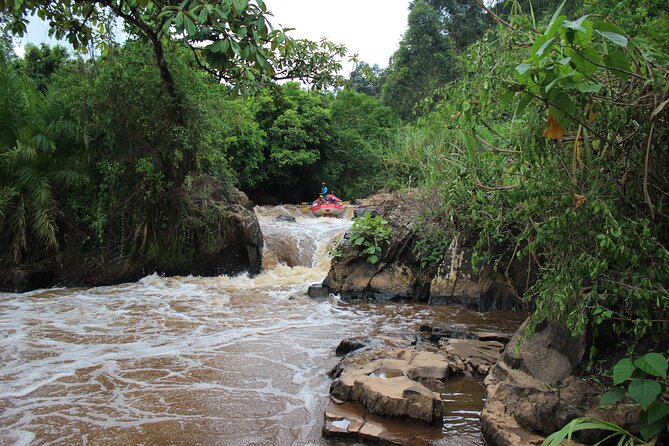
The jungle comes at you fast. Uganda Jungle Rafting takes you down the Birira River in western Uganda, a 25-kilometer run of near-continuous rapids surrounded by thick forest, birds, and wildlife. At $150 per person, this is not just a short splash on the water. You get roughly four hours of rafting, transport from Rukungiri, safety equipment, lunch, a snack, a drink, and photos.
I especially like the wild setting and the way the trip fits neatly between Bwindi, Queen Elizabeth National Park, crater lakes, and chimp trekking. I also like the friendly, safety-minded team, with international rafting experience and certificates. The main consideration is the physical nature of the trip: class II through IV+ rapids can be demanding, and the full route is not a gentle float. Families can use a calmer section, but children must be at least 10 years old.
In This Review
- Key points at a glance
- Why the Birira River is worth your time
- Starting in Rukungiri at 9:00 a.m.
- The 20-minute safety briefing
- Four hours and 25 kilometers of whitewater
- Lunch, snacks, and a community surprise
- Jungle views, birds, and wildlife
- Family participation and physical demands
- What $150 includes
- Who will enjoy this most
- Practical details before you book
- Should you book Uganda Jungle Rafting?
- FAQ
- Where does Uganda Jungle Rafting start?
- What time does the rafting start?
- How long does the full experience take?
- How long are you on the water?
- How far do you raft?
- What class of rapids are included?
- Is lunch included?
- What is the minimum age?
- How many people can join the activity?
- Is the booking refundable?
Key points at a glance
- 25 kilometers on the Birira River: Expect about four hours on the water, with rapids appearing one after another rather than in just a few short bursts.
- Class II to IV+ whitewater: This is a real adventure, not a sightseeing cruise. The route suits people who want action and can follow safety instructions.
- A useful western Uganda stop: Rukungiri places the activity within reach of Bwindi, safari parks, crater lakes, and chimp trekking routes.
- A full package for $150: Safety gear, a briefing, transport to the river, lunch, snack, end-of-trip drink, and photos are included.
- A community touch: The team includes a short surprise stop prepared by the local community beside the river.
- Family option available: Children from age 10 can participate, with families directed to a calmer part of the river.
Why the Birira River is worth your time
For many people, rafting in Uganda means the Nile near Jinja. The Birira offers something quite different. Here, the attraction is not a broad riverfront setting with a large rafting scene. It is the feeling of moving through a thick jungle corridor in a less expected part of the country.
The river runs through western Uganda, a region better known for gorillas, safari parks, crater lakes, and chimpanzees. That makes this activity particularly useful when you are planning a busy Uganda itinerary. You can place it between major wildlife stops instead of spending extra time crossing the country to reach Jinja.
The scenery is a major part of the experience. You are not simply waiting for the next rapid. Tropical birds and other wildlife are part of the setting, while the forest closes in around the river. The combination of moving water and heavy vegetation gives the trip a sense of discovery that a standard half-day rafting outing may not provide.
I would keep your expectations realistic. The jungle setting does not mean you will stop constantly to identify birds or search for animals. The route is active, and the rapids are the main event. Still, the surrounding forest gives every stretch of water a strong sense of place.
More Jinja and River Nile trips:
- Tubing the Nile
★ 5.0 · 69 reviews - Private Whitewater Tubing in Bujagali Hydropower Plant
★ 5.0 · 21 reviews - Family Float Trip
★ 5.0 · 8 reviews
Starting in Rukungiri at 9:00 a.m.
The day begins at 9:00 a.m. in Rukungiri town, at the listed meeting point near 6W5F+GXR. This makes Rukungiri your practical base for the outing, and the activity finishes at the same point.
From town, the drive to the river takes about 45 minutes. That transfer matters because the rafting does not begin right beside the meeting point. You should allow the full six-hour window, including the drive, briefing, lunch break, and return trip, rather than thinking of it as six hours of nonstop river time.
The schedule is well suited to a morning start. You have time to reach the river, prepare properly, and spend much of the middle of the day on the water. After returning to Rukungiri, you can continue toward your next destination or stay for the included celebration drink.
If you are linking this with another activity, do not schedule a tight connection. The river, weather, road conditions, and group preparation can all affect timing. The advertised return is around the end of the experience, not a guaranteed minute-by-minute arrival.
The 20-minute safety briefing
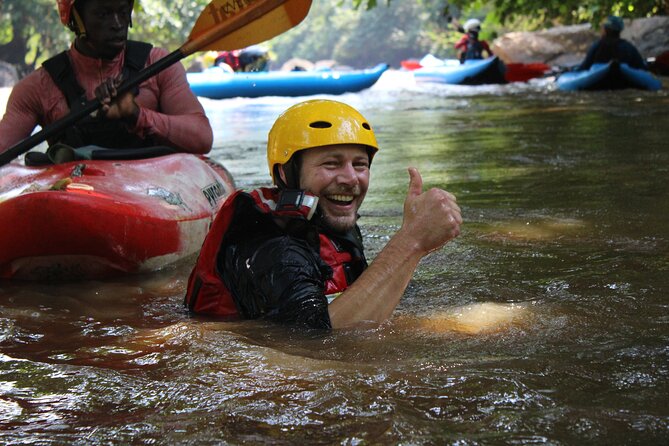
Before you enter the water, the team gives a safety briefing of about 20 minutes. This is an important part of the trip, not a formality to rush through.
The route includes class II, III, IV, and IV+ rapids. You need to understand how to sit, paddle, respond to commands, and react if the raft becomes unsettled. The operator supplies all safety equipment, and the guides have international rafting experience and certificates.
The team’s approach appears to balance excitement with control. Sadat is one of the team members associated with the experience, and the company places clear emphasis on keeping people safe while still making the river fun. That matters on a route with near-continuous rapids, where good instructions are more valuable than loud bravado.
You should listen closely during the briefing, even if you have rafted before. River conditions vary, and this is not necessarily the same kind of water you have handled elsewhere. The safety talk is also the best time to raise concerns about fitness, age, or your comfort level with stronger rapids.
Four hours and 25 kilometers of whitewater
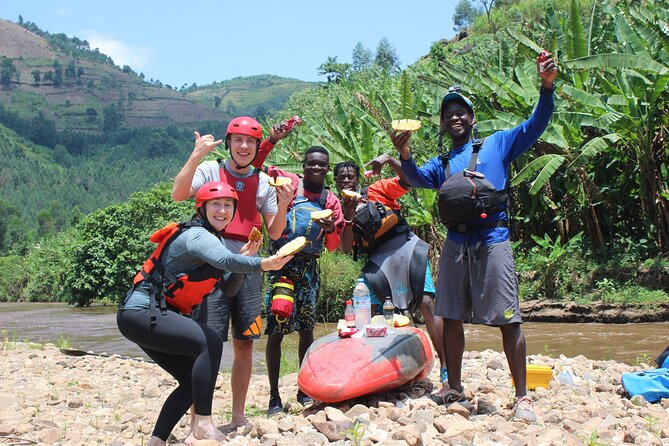
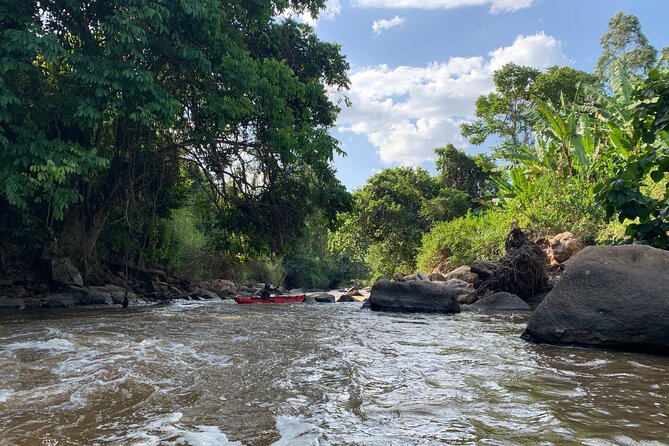
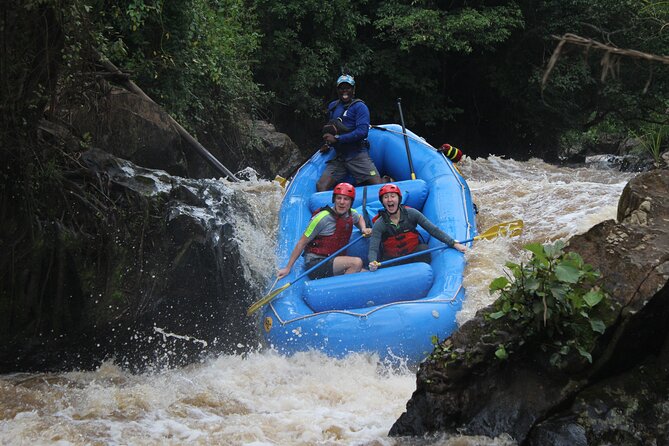
Once you are on the Birira, the trip covers about 25 kilometers in roughly four hours. The key word is continuity. The description of the route points to rapids appearing almost constantly, so you should expect far less passive floating than on a river with long calm stretches.
Class II rapids can provide a lively ride without being especially technical. Class IV and IV+ sections bring a more serious level of force and require you to follow the guide’s instructions carefully. The rating alone cannot predict how you will feel on the day, but it gives you a useful warning: this is an active outing with genuine adrenaline.
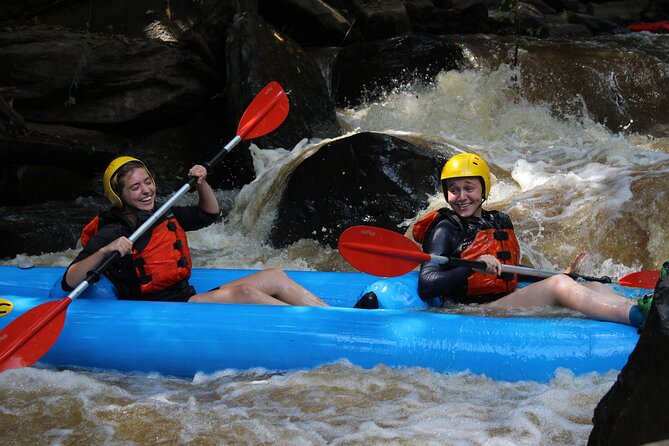
The raft is the main way to travel, with kayaking also part of the experience. The goal is to stay in the inflatable raft while having fun through the rapids, rather than treating the trip as a sequence of accidental swims. That said, whitewater is unpredictable, and you should be prepared for splashing and physical exertion.
The route’s length is another strength. Twenty-five kilometers gives the activity a proper journey feel. You are not simply repeating one rapid near a launch site. The river carries you through changing sections of forest and water, giving the day a clear beginning, middle, and finish.
The tradeoff is stamina. Four hours on moving water can feel long if you are not accustomed to paddling or bracing in a raft. I would choose this outing because you want a substantial adventure, not because you want an easy way to cool off.
A completely different sort of trip out of Uganda:
- 3 Hours Guided Cycling Tour Across Lake Victoria
★ 5.0 · 151 reviews - Kampala’s Best Experience walking tour
★ 5.0 · 137 reviews - 3 Days gorilla trekking Safari tour in Uganda
★ 5.0 · 121 reviews - Lake Victoria Island Cycling Tour from Kampala
★ 5.0 · 120 reviews
Lunch, snacks, and a community surprise
A 20 to 30-minute lunch break takes place on the water. Lunch, a snack, and a drink at the end are included in the price, which makes the $150 fee easier to assess.
The meal is more than a useful refueling stop. It breaks up a physically demanding activity and gives you a chance to enjoy the river without paddling through every minute. One especially nice detail is the local focus of the food and drink. The team has also served local gin, and the end-of-trip drink connects the experience with nearby farmers.
The operator includes a short surprise at the side of the river, prepared by the local community. Exact details are not given, which is probably part of the point. You should treat it as a small cultural and community element rather than expecting a formal village tour or a long performance.
These additions help the outing feel connected to western Uganda instead of being only an imported adventure product. They also provide natural pauses in a day that could otherwise become a blur of paddling, spray, and shouted instructions.
Jungle views, birds, and wildlife
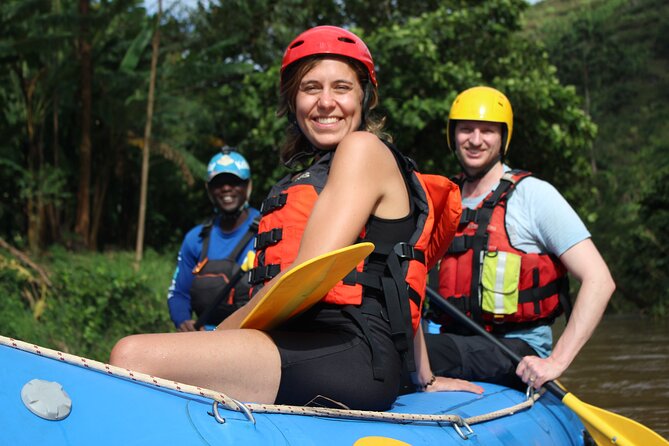
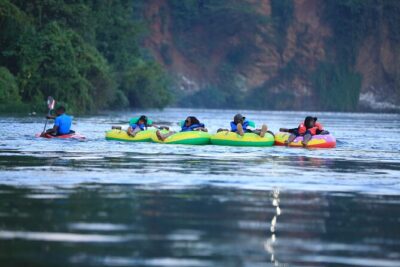
The Birira’s strongest visual quality is its thick tropical setting. Forest lines the river, and the water gives you a moving viewpoint that is difficult to get from a road or walking trail.
Tropical birds are part of the experience, and other wildlife may appear around the river. The activity is not promoted as a dedicated wildlife safari, so you should not book it mainly for animal sightings. The appeal is the whole setting: water, forest, birds, and the occasional glimpse of life along the banks.
The jungle scenery also changes how the rapids feel. A powerful section of water is more memorable when it arrives between walls of forest than when it unfolds beside developed river access. The setting makes the outing feel remote, even though you begin and end in a known town.
Photography is included, which is useful because taking your own camera through serious rapids is risky and inconvenient. I would still protect your phone and bring only what you can afford to get wet. The included photos let you focus on paddling rather than trying to document every rapid yourself.
Family participation and physical demands
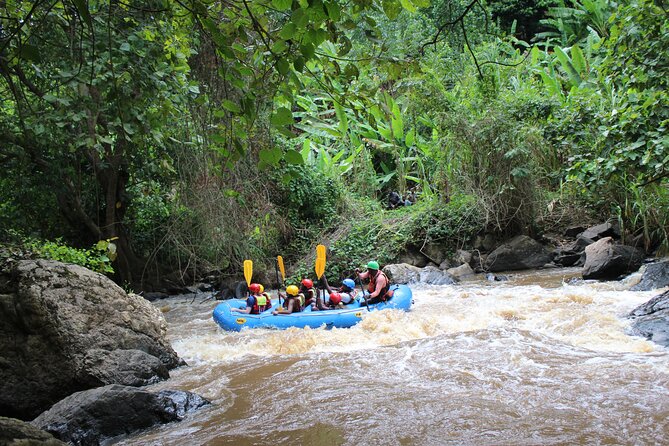
The minimum age is 10. Families are accepted on a calmer section of the river, with the same forest setting but a gentler level of water activity.
That option is valuable, but you should clarify the exact route and conditions when booking if you are traveling with children. The full river trip includes class IV+ rapids, so the family-friendly section should not be assumed to match the complete 25-kilometer course.
The activity is open to most people, but it is still a physical experience. You need to be comfortable spending about four hours on the water, following instructions, and handling repeated rapids. The available information does not give a detailed medical or fitness screening, so use your own judgment and discuss any concern with the operator before arrival.
The group limit is 20 people. That is large enough for a social outing but small enough to avoid the feel of a mass attraction. Group size can affect the pace of preparation and breaks, though the stated limit keeps the operation within a manageable range.
What $150 includes
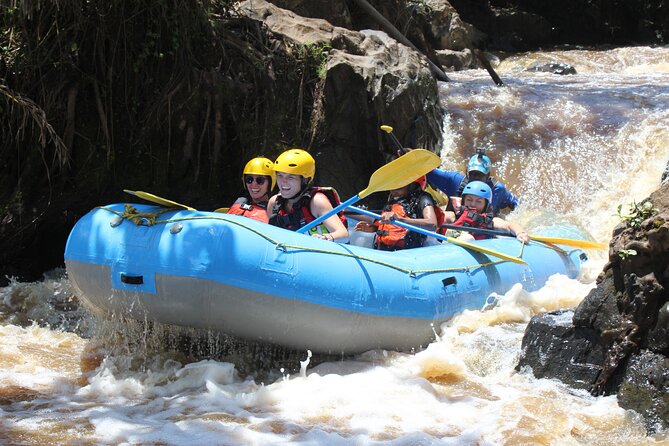
At $150 per person, the price is strongest when you count the inclusions rather than comparing it with a basic rafting ticket. The fee covers:
- Transport from Rukungiri to the river and back
- Safety equipment
- A safety briefing
- About four hours on the water
- The full river route, covering approximately 25 kilometers
- Lunch during the trip
- A snack
- A drink at the end
- Photos
- The local community surprise
That package reduces the small extra costs that often appear on adventure outings. You are not paying the headline price and then discovering separate fees for equipment, food, or photographs.
The value is also tied to location. If you are already moving between Bwindi and Queen Elizabeth National Park, the activity can add a major experience without requiring a separate journey to eastern Uganda. The best comparison is not simply the price of rafting elsewhere. Compare it with the time, transport, and planning required to add another major activity to your route.
The main caution is the non-refundable booking rule. Once booked, the experience cannot be changed or refunded, including cancellations for personal reasons. Only book when your western Uganda schedule is firm enough to accept that risk.
Who will enjoy this most
I would recommend Uganda Jungle Rafting to you if you want an active break from wildlife drives and forest walks. It works especially well for people traveling between Bwindi, Queen Elizabeth National Park, crater lakes, and chimp trekking areas.
You will probably like it if you value:
- Sustained whitewater rather than a short introduction
- Forest scenery and a less familiar part of Uganda
- A small-group outdoor activity
- Local food, drinks, and a community connection
- A package with gear, transport, lunch, and photos included
I would think twice if you dislike repeated rapids, physical effort, or getting thoroughly splashed. The trip is not the right choice for someone seeking a quiet river cruise. Families can participate on calmer water, but anyone expecting the full route to be mild should reconsider.
The activity also makes a strong contrast with gorilla trekking. Gorilla tracking is slow, patient, and focused on the forest floor. Birira rafting is noisy, wet, and fast. Adding both to your Uganda plans gives you two very different ways to experience the country.
Practical details before you book
Confirmation is normally issued at booking. If you book within two days of travel, confirmation may take up to 48 hours and remains subject to availability.
The meeting point is near public transportation in Rukungiri, and the activity ends back there. You should plan around the 9:00 a.m. start and the approximate six-hour total duration, including the drives.
Bring a practical attitude toward water and weather. The operator provides safety gear, but the supplied information does not specify a clothing list, changing facilities, or exact equipment types. Ask the team what to wear and what personal items can be stored before you arrive.
Because the trip includes photos, lunch, a snack, and a final drink, you can keep your day bag light. Avoid carrying anything valuable onto the raft unless the operator gives you a secure storage option.
Should you book Uganda Jungle Rafting?
Yes, if you want one of Uganda’s more unusual active experiences and you can handle serious whitewater. The combination of Birira River rapids, thick jungle, local hospitality, and a convenient western Uganda location gives this outing real value.
Book it as a full adventure, not as a gentle scenic ride. The strongest reasons to go are the near-continuous action, the rare setting away from the Nile, and the chance to fit a memorable river day between major wildlife stops. If you are bringing children, ask for the calmer family section. If your itinerary is uncertain, remember that the booking cannot be refunded or changed.
FAQ
Where does Uganda Jungle Rafting start?
The activity starts in Rukungiri town at the listed meeting point near 6W5F+GXR, Rukungiri, Uganda.
What time does the rafting start?
The start time is 9:00 a.m.
How long does the full experience take?
The total experience lasts about six hours, including the drive to the river, the safety briefing, the river trip, the lunch break, and the return drive.
How long are you on the water?
You spend about four hours on the water.
How far do you raft?
The full river trip covers approximately 25 kilometers on the Birira River.
What class of rapids are included?
The route includes class II through IV+ rapids.
Is lunch included?
Yes. Lunch, a snack, and a drink at the end of the experience are included.
What is the minimum age?
The minimum age is 10 years old. Families can use a calmer section of the river.
How many people can join the activity?
The maximum group size is 20 people.
Is the booking refundable?
No. The experience is non-refundable and cannot be changed for any reason after booking.
Just added around Uganda
- 4-Day QENP, Gorillas in Bwindi and Lake Bunyonyi relaxation★ 5.0 · 3 reviews
- 3 Days Murchison Falls Wildlife Safari★ 4.5 · 3 reviews
- 3 Days Private Tour in Murchison Falls National Park★ 5.0 · 3 reviews
- 2Days Murchison Falls NP Safari★ 5.0 · 3 reviews
- 2-Day Wildlife Safari in Lake Mburo National Park★ 5.0 · 3 reviews
- Kampala: Female-Guided Walking Tour★ 3.7 · 3 reviews
- From Kampala: Ziwa Rhino Sanctuary Day Tour with Lunch★ 4.7 · 3 reviews
- Entebbe kampala airport transfers★ 5.0 · 3 reviews
Jinja & River Nile Tours, compared.
Private Whitewater Tubing in Bujagali Hydropower Plant
Read our review →
Browse the lists this tour appears in