
Reviewed · HIKING & TREKKING
Rwenzori Mountains Trekking with Margherita Peak Summit
The summit is only part of the story. This seven-day Rwenzori trek reaches Margherita Peak at 5,109 meters, but the real reward is the strange, beautiful route through forest, bamboo, bog, giant heather, lobelia, glaciers, and high alpine rock. I like the slow progression in altitude and the chance to see black-and-white colobus monkeys, blue monkeys, chimpanzees, and the Rwenzori turaco.
I also like the private format, included meals, airport pickup, and the practical support offered by Bujuku Eco Tours & Travel. Guides and drivers such as Johnson, Geoffrey, and Joeffery have received repeated praise for organization and care. The main drawback is simple: this is a serious mountaineering trek, not a scenic stroll, and climbing gear is not included in the $1,400 price.
In This Review
- Key points before you commit
- Why the Rwenzori feels unlike other African hikes
- Day 1: From Nyakalengijja to Nyabitaba Hut
- Day 2: Bamboo, slippery rock, and John Matte Hut
- Day 3: Bujuku Bog and the view from Bujuku Lake
- Day 4: Groundsel Gully and cold Elena Hut
- Day 5: The Margherita Peak summit attempt
- Day 6: Fresh Field Pass and the route toward Guy Yeoman
- Day 7: Completing the circuit through bamboo forest
- What the $1,400 price really covers
- The support that can make or break the week
- Who should book this Rwenzori trek?
- Should you book the Margherita Peak trek?
- FAQ
- Where does the trek start?
- Where does the activity end?
- How long does the experience last?
- What is the highest point reached?
- How many hours do you hike each day?
- Are meals included?
- Is climbing equipment included?
- What fitness level is required?
- Is this a private tour?
- Can I cancel for a full refund?
Key points before you commit
- Margherita Peak reaches 5,109 meters: The summit section involves glaciers, ice, slippery rock, fog, and exposed ground.
- Seven days create a gradual route upward: You move from farmland and forest into bamboo, bog, giant heather, lobelia, and alpine terrain.
- The trek uses mountain huts: Overnight stops include Nyabitaba, John Matte, Bujuku, Elena, and Guy Yeoman camps.
- The scenery changes dramatically: Expect rivers, waterfalls, lakes, mossy rock, giant groundsels, and views toward Mount Baker, Mount Speke, and Congo.
- The price includes meals and private support: Breakfast, lunch, and dinner are listed for all seven days, while climbing equipment costs extra.
- You need moderate fitness and real determination: Several days involve six to eight hours of hiking, with the summit day being the toughest.
Why the Rwenzori feels unlike other African hikes
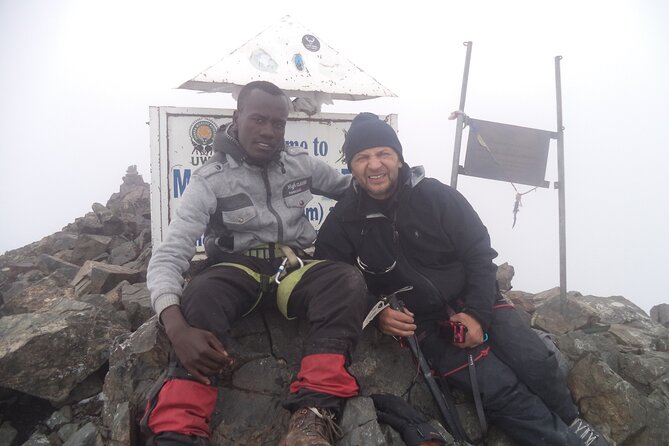
Uganda’s Rwenzori Mountains are often called the Mountains of the Moon, and the name fits once the trail reaches the upper valleys. This is equatorial Africa, yet the high country has glaciers, ice, giant lobelias, strange groundsels, and heather trees that look as if they belong in a fantasy film.
The protected mountain area covers the highest parts of a range roughly 120 kilometers long and 65 kilometers wide. It supports 70 mammal species and 217 bird species, including 19 Albertine Rift endemics. You are not simply walking toward a high point. You are passing through several distinct ecological zones in a single week.
I find that variety more rewarding than a route that gives you one dramatic summit and little else. The lower trail feels like a forest expedition, the middle section becomes a wet and tiring bog walk, and the upper section turns into a genuine mountaineering challenge.
The scenery is also unusually watery. Fast rivers, waterfalls, tributaries, and high lakes shape the route. Expect wet feet, mud, slippery rocks, and cold pools of bog water. That is part of the Rwenzori experience, though it is not always comfortable.
More hikes and treks in Kampala:
- 3 Days gorilla trekking Safari tour in Uganda
★ 5.0 · 121 reviews - 8-Day Murchison Falls, Chimp and Epic Gorilla Trekking Safari
★ 5.0 · 72 reviews - 5-Day Pearl of Africa Chimps and Gorilla Trekking Safari
★ 5.0 · 52 reviews
Day 1: From Nyakalengijja to Nyabitaba Hut
Your driver takes you to Nyakalengijja, where the trip begins with a briefing and equipment arrangements. The trail first crosses farmland before reaching the park boundary and entering thick forest along the Mubuku River.
You cross the Mahoma River tributary and then begin a long, steep climb toward Nyabitaba Hut. This first day covers about six to seven hours and gains around 1,036 meters. That is a solid opening day, especially if you have just arrived in Uganda and are still adjusting to the heat, travel, and early start.
The forest gives the route a proper wilderness feel. You might hear chimpanzees and see black-and-white colobus monkeys or blue monkeys. The Rwenzori turaco, with its striking colors, is another prize for anyone carrying binoculars.
Nyabitaba is important because it marks the beginning of the mountain rhythm: hike, eat, rest, and prepare for another long day. The first day is not the technical part of the trek, but the climb is enough to remind you that the schedule is demanding from the start.
Day 2: Bamboo, slippery rock, and John Matte Hut
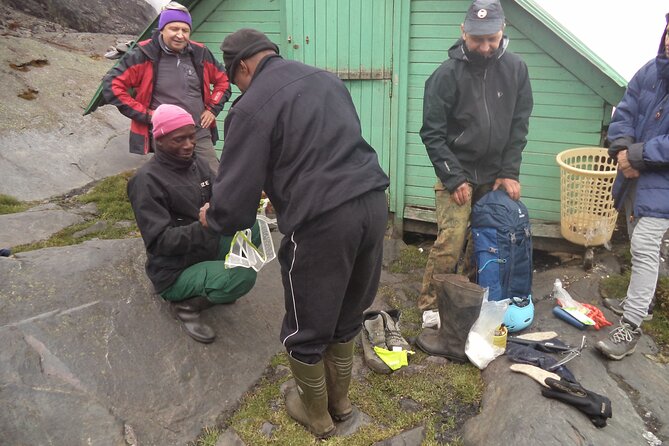
From Nyabitaba, the path drops through forest toward the Kurt Shafer Bridge, below the meeting point of the Mubuku and Bujuku rivers. The trail then enters bamboo forest and crosses a long stretch of moss-covered rock.
This section can be tiring because the rock is slippery and the route is uneven. Move carefully rather than chasing speed. The seven to eight-hour walking time is long, and the elevation gain is about 854 meters.
At Nyamuleju rock shelter, you may get views of Mount Stanley and Mount Speke before entering the giant heather zone. From here, the vegetation becomes one of the great features of the trip. Giant heather, lobelia, and groundsels give the upper Rwenzori a look that is unlike ordinary tropical hiking.
The final approach to John Matte Hut passes through a bog. You may find this funny for the first few minutes, then less funny when your boots sink into cold ooze. Still, the mud and bog are not an accidental nuisance. They are part of the high-altitude environment that makes the Rwenzori distinctive.
Day 3: Bujuku Bog and the view from Bujuku Lake
Day three is shorter, at about four to five hours, with an elevation gain of roughly 457 meters. That relative pause matters because your body needs time to adjust before the higher camps and summit attempt.
The trail crosses the Bujuku River and enters Lower Bigo Bog, known for its giant lobelias. You hop from tussock to tussock, trying to keep your boots above the freezing water and mud. You may not succeed every time.
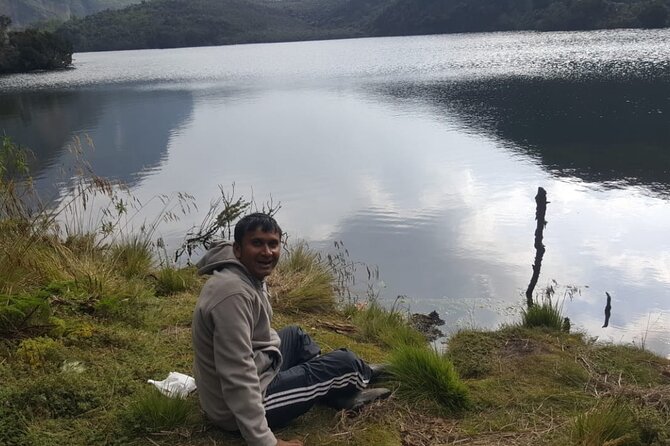
Upper Bigo Bog leads to Bujuku Lake. From the lake, Mount Baker rises to the south and Mount Stanley appears to the west. Bujuku Hut sits in a narrow valley beneath Mount Baker and Mount Speke, making it one of the most memorable overnight locations on the route.
This is also an important acclimatization stop for people attempting Mount Stanley or Mount Speke. For the Margherita route, it gives you a chance to rest before the next day’s steep climb toward Elena Hut.
A completely different sort of trip out of Kampala:
- 3 Hours Guided Cycling Tour Across Lake Victoria
★ 5.0 · 151 reviews - Kampala’s Best Experience walking tour
★ 5.0 · 137 reviews - Lake Victoria Island Cycling Tour from Kampala
★ 5.0 · 120 reviews - Kampala Walking City Tours (Women Guided)
★ 5.0 · 115 reviews
Day 4: Groundsel Gully and cold Elena Hut
Leaving Bujuku, you continue through more bog before climbing the steep slopes west of the lake. The route passes through Groundsel Gully, a particularly striking section filled with giant groundsels and unusual high-altitude plants.
The trail then divides. One direction leads toward Scott-Elliot Pass and Kitandara Lakes, while the route for Margherita climbers turns toward Elena Hut. The ascent to Elena is steep and crosses large boulders. This is a day of about five to six hours with around 579 meters of climbing.
Elena Hut is colder and more exposed than the lower camps. Dinner and sleep here prepare you for the summit attempt, but do not expect a relaxed lodge-style night. You are at altitude, the surroundings are icy, and the next morning will begin early.
This is where the trek changes character. Until now, the route has been a demanding high-altitude hike. From Elena onward, you are preparing for snow, ice, exposure, and a peak climb.
Day 5: The Margherita Peak summit attempt
The summit day is the reason most people choose this route, and it is also the part that requires the clearest expectations. Reaching Margherita Peak generally takes about four to five hours from Elena Hut, depending on weather and walking pace.
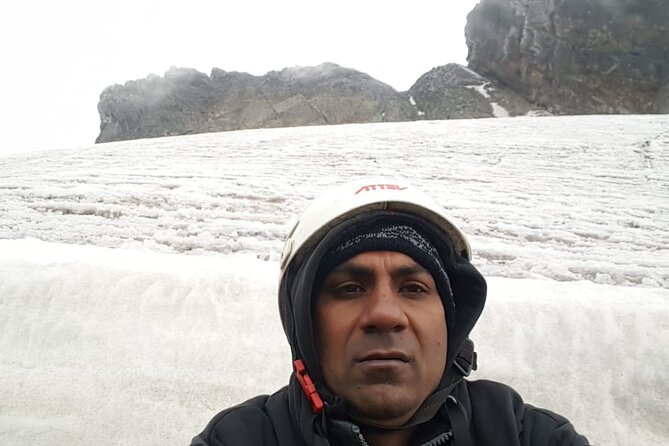
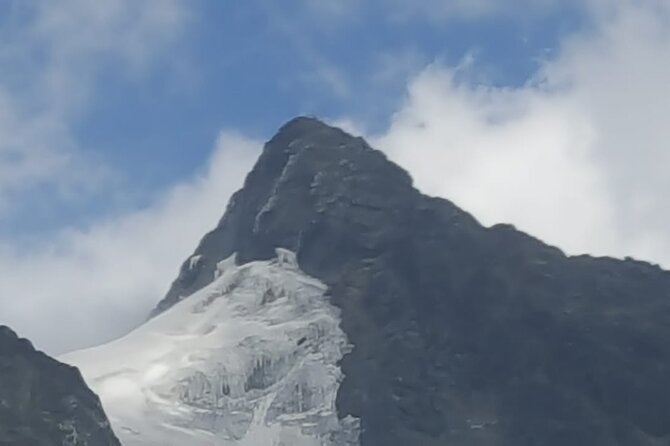
The route crosses three glaciers and includes slippery rock, ice, and exposed sections open on several sides. You climb onto the glaciers, cross the Stanley Plateau, and continue toward the 5,109-meter summit. Fog and cold weather can make the route feel even more serious.
Altitude sickness is a real concern at this height, and the description specifically notes fog, cold conditions, and the need for acclimatization. You should listen closely to your guides and be honest about how you feel. Reaching a summit is never worth hiding symptoms.
The final scramble to Margherita Peak is tough. If conditions cooperate, the reward is the knowledge that you have reached the highest point of the Rwenzori Mountains. The descent back to Elena Hut takes another two to three hours.
The supplied schedule has a gap after the descent from Elena, then refers to Kitandara Hut on the following day. Ask Bujuku Eco Tours & Travel to confirm exactly where you sleep after the summit and how the Elena to Kitandara section is handled. This is a small but important planning detail, especially when you are organizing equipment and meals.
Day 6: Fresh Field Pass and the route toward Guy Yeoman
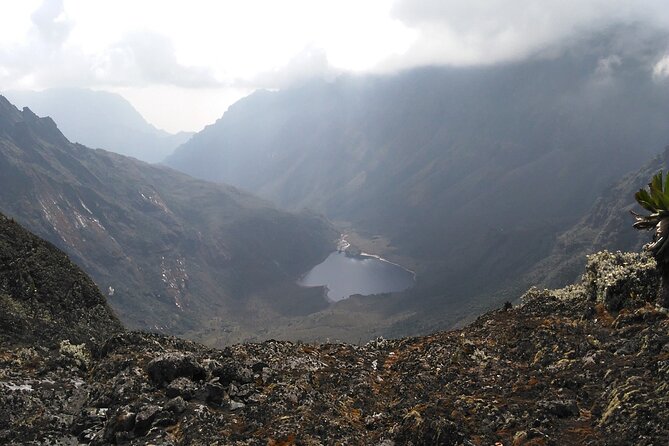
The next section begins from Kitandara, climbing steeply up a headwall from the base of Mount Baker. You continue along the mountain’s south side to Fresh Field Pass at 4,282 meters.
From the pass, you can look west toward Congo and north toward Mount Stanley. These views give the trek a wider sense of place. You are not only climbing inside Uganda’s park. You are high on a mountain range linked to the borders and geography of central Africa.
The route then follows a long, high alpine section covered with moss before descending over steep rocky ground. You pass the rock shelter at Bujongolo, the base camp used by the Duke of Abruzzi’s historic 1906 expedition.
The day takes about six to seven hours and ends at Guy Yeoman camp. After the summit effort, this will still be a demanding day. Your legs may be tired, and the descent can be hard on knees and ankles.
Day 7: Completing the circuit through bamboo forest
The final day descends below Guy Yeoman along the cliffs of Kichuchu. Beyond Kichuchu, the muddy path crosses the Mubuku River twice through bamboo forest before climbing down to Nyabitaba.
You then continue descending to complete the circuit, reaching Mihunga Gate by evening. The descent lasts about seven to eight hours, so this is not a gentle walk out. Budget enough energy for the final river crossings, mud, and uneven trail.
Finishing at the gate gives the trek a satisfying shape. You have passed from cultivated land to forest, from forest to bamboo and bog, and from bog to glaciers and ice before returning through the lower mountain zones.
What the $1,400 price really covers
At $1,400 per person, the price is not cheap, but a seven-day private mountain trip can offer good value if the organization works as promised. Breakfast, lunch, and dinner are listed for all seven days, which removes one major concern on a long trek.
Pickup is offered from Entebbe Airport, and the activity ends back at the meeting point. The private format means your group is not combined with strangers. That can help when your pace, summit hopes, or need for rest differs from another group.
Climbing gear is not included. This is the biggest extra cost to consider. The summit route involves glaciers, ice, exposed ground, and steep rock, so ask in advance what equipment you need and what can be arranged locally.
Past customers have praised the company’s communication, flexibility, guides, transport, and reasonable pricing. Johnson and Geoffrey are specifically praised for kind, efficient service, while Joeffery is associated with strong support during a Margherita summit. Names and staff can change, so treat these as useful indications of the company’s service style, not a guarantee of who will lead your trek.
The support that can make or break the week
The strongest pattern in the supplied feedback is not luxury. It is organization and human support. People describe fast communication, flexible planning, professional guides, and help from the first contact through the return to the gate.
That matters in the Rwenzori because conditions can be tiring and uncertain. A good guide helps you handle the pace, the bog crossings, the steep rock, the cold huts, and the summit pressure. The company has also arranged longer Uganda trips involving chimpanzee trekking, transport, and other activities, which may appeal if you want to add more time in the country.
The private setup gives you a better chance to discuss your pace and physical condition openly. Still, private does not mean easy. You will be responsible for walking six to eight hours on many days, carrying or managing your personal equipment, and coping with wet, cold, muddy, and exposed conditions.
Who should book this Rwenzori trek?
I would choose this experience if you want a serious mountain challenge with unusual plants, wildlife, and changing scenery. It suits someone with moderate physical fitness who is comfortable with long days and understands that the Margherita summit is a mountaineering effort.
It may also suit you if you value personal service over a large group. The company’s repeated praise for communication and guide support is encouraging, especially for a remote trek where clear planning matters.
I would think twice if your main goal is an easy view of the mountains. Even the lower days involve steep climbs, slippery rock, mud, and long walking times. Anyone concerned about altitude, cold, exposed terrain, or glacier travel should ask detailed questions before paying.
The cancellation terms are fairly flexible: you can receive a full refund if you cancel at least 24 hours before the start time. Changes made later are not accepted, and the company may offer a new date or a full refund if the minimum number of participants is not reached.
Should you book the Margherita Peak trek?
Book it if you want one of Africa’s most unusual mountain routes and are ready for the summit to be hard, cold, muddy, and rewarding. The combination of forest wildlife, giant alpine plants, high lakes, glaciers, and a 5,109-meter peak gives this trip far more substance than a simple summit photo.
Before confirming, ask three practical questions: which climbing gear is available, how the post-summit night is arranged between Elena and Kitandara, and which guide will lead your group. If those answers are clear, the $1,400 price looks reasonable for a private seven-day trek with meals, airport pickup, and mountain support.
FAQ
Where does the trek start?
The meeting point is Entebbe Airport in Entebbe, Uganda. Pickup is offered.
Where does the activity end?
The activity ends back at the meeting point. The trek itself finishes at Mihunga Gate after the descent from Nyabitaba.
How long does the experience last?
The trek lasts approximately seven days.
What is the highest point reached?
The route aims for Margherita Peak on Mount Stanley, which reaches 5,109 meters above sea level.
How many hours do you hike each day?
Most hiking days take about four to eight hours. The summit climb takes roughly four to five hours up and two to three hours down, depending on weather and pace.
Are meals included?
Yes. Breakfast, lunch, and dinner are listed as included for all seven days.
Is climbing equipment included?
No. Climbing gear is not included in the tour price.
What fitness level is required?
The experience is intended for people with a moderate physical fitness level. The route includes long hiking days, steep climbs, bogs, slippery rocks, glaciers, and exposed sections.
Is this a private tour?
Yes. Only your group participates in the private activity.
Can I cancel for a full refund?
Yes, if you cancel at least 24 hours before the experience start time. Cancellations made less than 24 hours before the start time are not refunded.
Just added around Kampala
- 4-Day QENP, Gorillas in Bwindi and Lake Bunyonyi relaxation★ 5.0 · 3 reviews
- 3 Days Murchison Falls Wildlife Safari★ 4.5 · 3 reviews
- 3 Days Private Tour in Murchison Falls National Park★ 5.0 · 3 reviews
- 2Days Murchison Falls NP Safari★ 5.0 · 3 reviews
- 2-Day Wildlife Safari in Lake Mburo National Park★ 5.0 · 3 reviews
- Kampala: Female-Guided Walking Tour★ 3.7 · 3 reviews
- Entebbe kampala airport transfers★ 5.0 · 3 reviews
- From Kampala: Ziwa Rhino Sanctuary Day Tour with Lunch★ 4.7 · 3 reviews
Hiking & Trekking, compared.
3 Days gorilla trekking Safari tour in Uganda
Read our review →
8-Day Murchison Falls, Chimp and Epic Gorilla Trekking Safari
Read our review →
5-Day Pearl of Africa Chimps and Gorilla Trekking Safari
Read our review →
3-Day Tour to Uganda – Gorilla Trekking Bwindi Forest
Read our review →
4-Day Uganda Gorilla Trekking and Wildlife Safari
Read our review →
Private 3 Day Gorilla Trekking Safari in Uganda
Read our review →
Browse the lists this tour appears in