
Reviewed · GORILLA TREKKING TOURS
9 day Gorilla Trekking, Chimpanzee & Wilderness Safari (mid-range)
Uganda packs a lot into nine days. This private safari links rhino tracking, chimpanzee trekking, and gorilla trekking with classic game drives and boat trips, giving you a broad look at the country rather than a single-park visit. You begin near Entebbe, travel north to Murchison Falls, then head west through Kibale, Queen Elizabeth, Bwindi, and Lake Mburo before returning toward Kampala or Entebbe.
I like the variety here. You can watch rhinos on foot at Ziwa, search for lions and elephants from a safari vehicle, and then trade the open savanna for thick forest and close primate encounters. I also like the private format, since your own group can travel at its pace and ask the guide to spend more time where the action is.
The main drawback is the amount of time spent on the road. This is an ambitious route, and some transfer days run for five or six hours. The gorilla permit is the prize at the center of the trip, but you need a moderate level of fitness and must be ready for early starts, long drives, and changing conditions.
In This Review
- Key points to know before booking
- Why this Uganda route works so well
- Day 1: Rhinos on foot, then the Nile at Murchison Falls
- Day 2: Game drives and the Nile cruise
- Day 3: A long transfer to Fort Portal and Kibale
- Day 4: Chimpanzee tracking in Kibale Forest
- Day 5: Queen Elizabeth by vehicle and boat
- Day 6: Ishasha and the search for tree-climbing lions
- Day 7: The main event in Bwindi
- Day 8: From Bwindi to Lake Mburo
- Day 9: A final game drive and the Equator stop
- Fitness, timing, and what to pack
- How the $3,702 price measures up
- Who should book this safari?
- Final verdict
- FAQ
- Where does the safari start?
- Where does the safari end?
- How long is the tour?
- Is this a private tour?
- What animals might I see?
- Where does chimpanzee tracking take place?
- Where does gorilla trekking take place?
- What fitness level is required?
- What is the cancellation policy?
Key points to know before booking
- Three major animal encounters: Track rhinos on foot, follow chimpanzees in Kibale Forest, and search for mountain gorillas in Bwindi.
- Two excellent boat outings: The Nile cruise at Murchison Falls and the Kazinga Channel cruise focus on hippos, crocodiles, elephants, and water birds.
- Private touring: Only your group participates, which allows more flexibility than a large coach tour.
- A very full route: The safari covers Murchison Falls, Kibale, Queen Elizabeth, Bwindi, and Lake Mburo in nine days.
- Early start from Entebbe: Pickup is offered, with the stated meeting point at Café Javas on Berkeley Road and a 5:00 am start.
- Strong personal service: Jon is repeatedly praised for quick replies, detailed planning, and helping shape the trip around each client’s questions and needs.
Why this Uganda route works so well
At $3,702 per person, this is not a cheap holiday. It is a mid-range private safari built around several costly permits, park entries, guiding services, transport, and specialist activities. The value comes from the range: you are not paying for one gorilla trek and a few spare days. You are combining Uganda’s most famous primate experiences with some of its best wildlife viewing.
The price still deserves a careful check before you pay. The details provided do not spell out every accommodation level, meal, transfer, or permit arrangement included in the rate. Ask for a written list of inclusions, especially the gorilla and chimpanzee permits, park fees, lodging, meals, fuel, and airport transfers.
A private tour is particularly useful on a route like this. You will spend many hours in a vehicle, and a private group can often make small adjustments to stops and timing. The operator, Safaris By Jon, also receives strong praise for communication. One solo client described receiving detailed answers to many questions and spending more than an hour on a planning call. That sort of preparation matters when you are committing to a demanding nine-day schedule.
More gorilla trekking permits and treks:
- 3 Days gorilla trekking Safari tour in Uganda
★ 5.0 · 121 reviews - 8-Day Murchison Falls, Chimp and Epic Gorilla Trekking Safari
★ 5.0 · 72 reviews - 5-Day Pearl of Africa Chimps and Gorilla Trekking Safari
★ 5.0 · 52 reviews
Day 1: Rhinos on foot, then the Nile at Murchison Falls
The first start is early, at 5:00 am. From the Entebbe meeting point, you head toward Ziwa Rhino and Wildlife Ranch, where a ranger-guide leads you on foot through the sanctuary to find rhinos. More than 30 rhinos live here, and the walking format gives this first encounter a different feel from a vehicle-based game drive.
This is a smart opening activity. You get close to one of Africa’s great animals while learning how a protected sanctuary supports rhino conservation. It also gives you a chance to stretch your legs before the long drive farther north.
The route then continues to Murchison Falls National Park. The falls are formed where the River Nile pushes through a narrow section before continuing toward Lake Albert and then north toward South Sudan. The scheduled falls visit is short, about an hour, so treat it as an introduction rather than a full exploration of the park.
The day combines a memorable walk with a major natural sight, but it will be long. You should expect the early departure and road time to shape the whole day.
Day 2: Game drives and the Nile cruise
Murchison Falls earns a full day here. You begin with an early morning game drive, when you have the best chance of finding animals active on the park’s tracks. The target list includes elephants, lions, leopards, buffaloes, hyenas, and several antelope species.
Wildlife sightings are never guaranteed, so it is best to judge this morning by the quality of the search, not by a checklist. Lions may be resting, leopards may stay out of sight, and some animals may be spotted only briefly. Your guide’s patience and ability to read the area will matter.
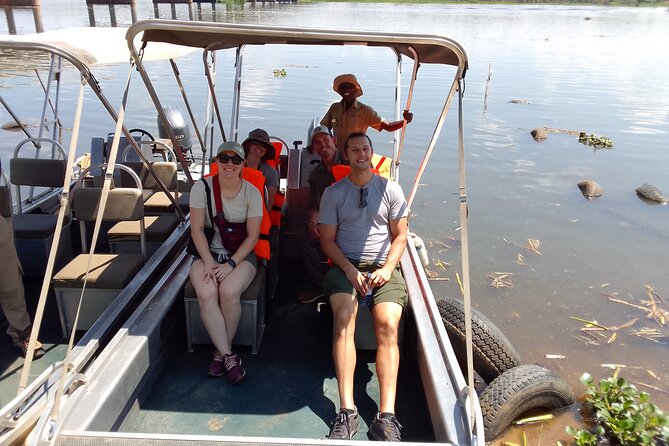
After lunch, you take a three-hour boat cruise on the Nile toward the falls. This changes your view completely. Instead of scanning from a vehicle, you watch the banks for elephants, buffaloes, and antelopes coming to drink, while hippos and crocodiles gather near the water.
The cruise is also excellent for bird watching. The slower pace gives you time to notice water birds that are easy to miss during a game drive. I consider this one of the best-balanced days of the trip because the morning focuses on land animals and the afternoon brings you close to river wildlife.
Day 3: A long transfer to Fort Portal and Kibale
Day 3 is mainly a travel day, with about six hours on the road from Murchison Falls toward Fort Portal and Kibale Forest National Park. That may sound less exciting than a game drive, but it is the necessary link between northern Uganda and the primate-rich west.
After lunch in the Fort Portal area, you may choose a nature walk with views of crater lakes and the Rwenzori Mountains. This optional stop helps break up the drive and gives you a quieter afternoon before the next day’s forest activity.
The tradeoff is clear. You gain access to Kibale without adding extra days, but you sacrifice relaxed pacing. If you dislike long vehicle transfers, this is one of the days to consider carefully. If you want Uganda’s major highlights in one trip, the route is a practical compromise.
More chimpanzee trekking trips:
- 8-Day Murchison Falls, Chimp and Epic Gorilla Trekking
★ 5.0 · 32 reviews - 15-Day Gorilla and chimps Trekking, Big 5 and Nature Sighting Safari
★ 5.0 · 31 reviews - 5 Days Uganda Gorilla, Chimpanzee and Wildlife Safari
★ 5.0 · 29 reviews - 5 Day Gorillas, Wildlife and Kalinzu Forest Chimp Trek
★ 5.0 · 27 reviews
Day 4: Chimpanzee tracking in Kibale Forest
Chimpanzee tracking begins with an early breakfast and a briefing at the Kanyanchu Visitor Center. A ranger-guide then leads you into Kibale Forest in search of chimpanzees.
The experience is less predictable than visiting animals in a zoo or sanctuary. You may hear calls before you see the group, and the forest setting means you are watching primates behave in their own home. The outing is scheduled for about six hours, so you should be ready for a substantial forest walk.
Kibale also offers the possibility of seeing other primates, including monkeys and baboons. Chimpanzees are the main goal, but keeping your attention on the surrounding trees and trails can make the walk more rewarding.
After lunch, you transfer for about three hours to Queen Elizabeth National Park. This creates another full day, but it also keeps the itinerary moving toward the gorilla trek without adding a separate overnight stop.
Day 5: Queen Elizabeth by vehicle and boat
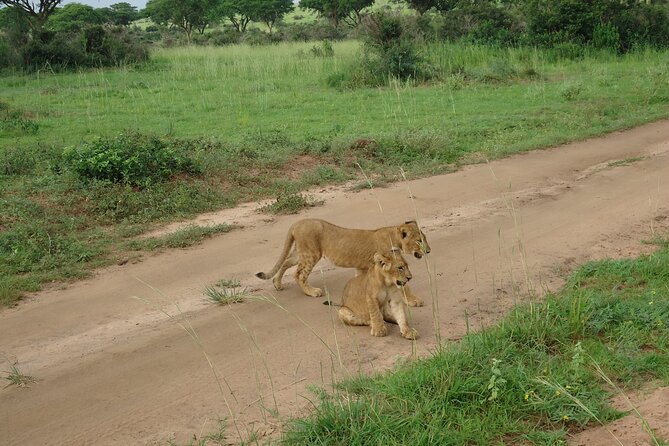
The morning game drive uses the Kasenyi tracks, one of the park’s main areas for searching for lions, elephants, buffaloes, leopards, antelopes, hyenas, and giant forest hogs. The four-hour drive gives you a solid chance to see a range of species, though wildlife remains governed by luck, weather, and animal movement.
The afternoon Kazinga Channel cruise is the day’s second major activity. The channel connects Lakes Edward and George and attracts large numbers of hippos, along with crocodiles, buffaloes, elephants, and many water birds.
I like the contrast between this cruise and the Nile outing. Both involve water and wildlife, but the Kazinga Channel focuses on a compact corridor where animals often gather. Bring patience and keep your eyes moving between the banks, the water, and the birdlife.
There is a lot packed into this day, so you may feel ready for a quiet evening afterward. That is normal. The safari is active from early morning, and the next day includes another game drive before the road to Bwindi.
Day 6: Ishasha and the search for tree-climbing lions
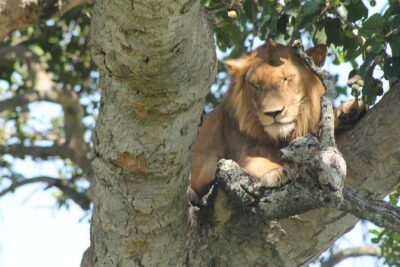
You leave the northern part of Queen Elizabeth and travel south to Ishasha. This sector is known for its tree-climbing lions, and the plan includes a short game drive to look for them.
These lions are the reason for the detour. Finding them resting in the branches would be a memorable sight, but you should treat it as a possibility rather than a promise. Even without a lion sighting, Ishasha adds a different setting to the safari and breaks up the standard northern circuit.
After lunch, you continue for about three hours toward Bwindi Impenetrable Forest. This is another road-heavy day, yet the route makes sense for anyone who wants both classic wildlife viewing and mountain gorillas in one journey.
Day 7: The main event in Bwindi
Gorilla trekking is the centerpiece of this safari. After an early breakfast, you report to the park headquarters for a briefing, then join a ranger-guide and head into the forest to find the gorilla family assigned to your group.
The exact effort required can vary greatly, and the supplied schedule does not give a realistic walking duration, so do not plan this as a quick outing. Your fitness should be moderate at minimum, and you should be comfortable with a demanding forest trek.
The reward is the chance to watch mountain gorillas in their natural habitat. One particularly enthusiastic account described this as the trip’s standout experience, while another client said the gorilla encounter exceeded expectations. Those comments fit the structure of the trip: the other activities build a superb safari, but Bwindi is the reason many people will book it.
An optional evening cultural walk may be available after the trek, depending on how you feel. It offers insight into the lives of communities around the park, including the Batwa, who once lived in the forest. After a hard trek, you may prefer to rest. That choice is sensible, not a missed opportunity.
Day 8: From Bwindi to Lake Mburo
After breakfast, you leave Bwindi for Lake Mburo National Park, with lunch along the way. The transfer is listed at about five hours, so this is another day when the road is a major part of the experience.
After time to relax, you head out on an evening guided walking safari. This is a useful change of pace after several vehicle drives and forest treks. You may see zebras, giraffes, buffaloes, and several antelope species while moving through the park with a guide on foot.
Lake Mburo gives the final part of the safari a lighter, more open feel. It is not being used as a replacement for the larger parks. Instead, it adds a walking experience and one more chance to see animals before your return toward Kampala or Entebbe.
Day 9: A final game drive and the Equator stop
The final morning includes a game drive as you leave Lake Mburo. This gives you one last chance to see animals before the return journey.
The route includes a stop at the Equator crossing sign, where you can take photographs, have lunch, and browse for souvenirs. It is a straightforward tourist stop, but it works well at the end of a long safari. You get a clear photo, a break from the vehicle, and a familiar marker for the journey home.
Drop-off can be in Entebbe or Kampala, depending on your chosen arrangement. The activity is described as ending back at the meeting point, so confirm the final drop-off details before departure if your accommodation is elsewhere.
Fitness, timing, and what to pack
You need a moderate fitness level for this trip. The gorilla and chimpanzee outings are the most physically demanding parts, but the long drives also test your energy. Early breakfasts and dawn game drives are part of the deal.
A practical packing list should include:
- Sturdy walking shoes for forest trekking and the rhino walk
- Lightweight clothing suitable for warm days and muddy conditions
- Rain protection for forest activities
- A small daypack for the primate treks
- Camera equipment that you can carry comfortably
- Personal supplies for long road transfers
The tour is private, so only your group participates. That is a major advantage for couples, families, or solo clients who want direct contact with the guide. It does not remove the physical demands, but it can make the overall rhythm easier to manage.
How the $3,702 price measures up
The $3,702 per-person price reflects a high-value route, but you should not judge it against a simple nine-day hotel package. This trip includes several national parks, specialist guiding, boat activities, game drives, and three important wildlife encounters: rhinos, chimpanzees, and gorillas.
The biggest question is what the price includes. Before booking, request a clear breakdown of permits, park admission, lodging, meals, transport, guide services, and pickup. The provided details confirm admission for several listed activities, but they do not fully explain every cost.
The private format and planning support add practical value. Jon is praised for fast responses, long planning conversations, and efforts to create the best possible adventure. That matters in Uganda, where permits, distances, and park schedules need to fit together properly.
Cancellation terms are fairly strict close to departure. Cancel at least six full days before the start for a full refund, two to six days before for a 50 percent refund, and within two days for no refund. The experience also requires a minimum number of participants, though it is described as private once confirmed.
Who should book this safari?
You should consider this trip if you want Uganda’s major highlights in one well-planned circuit. It suits people who value gorillas above all else but also want classic safari animals, chimpanzees, rhinos, boat cruises, and a cultural option.
It is less suitable if you want slow mornings, luxury downtime, or very short transfers. The route covers a lot of ground, and several days combine an activity with a long drive.
For a solo visitor, the private setup and direct planning help are useful. For families or couples, the range of activities keeps the trip varied. For anyone with limited mobility or low fitness, the primate treks deserve serious thought before booking.
Final verdict
I would book this safari for a first major trip to Uganda if I wanted variety and had only nine days. The route gives you a fine mix of forests, rivers, open parkland, walking experiences, and close wildlife encounters.
The strongest reasons to choose it are the gorilla trek, chimpanzee tracking, two boat cruises, and private service from Jon. The main caution is the pace. Ask detailed questions about inclusions and lodging, prepare for long drives, and arrive ready for physical activity. If those conditions suit you, this is a powerful way to see Uganda’s best-known parks without spending your whole holiday in one region.
FAQ
Where does the safari start?
The stated meeting point is Café Javas on Berkeley Road in Entebbe, Uganda. Pickup is offered, and the listed start time is 5:00 am.
Where does the safari end?
The activity ends back at the meeting point. The final day can include drop-off in Entebbe or Kampala, depending on your chosen arrangement.
How long is the tour?
The tour lasts approximately nine days.
Is this a private tour?
Yes. Only your group participates in the activity.
What animals might I see?
Possible sightings include rhinos, chimpanzees, mountain gorillas, lions, leopards, elephants, buffaloes, hyenas, hippos, crocodiles, zebras, giraffes, antelopes, monkeys, baboons, giant forest hogs, and many water birds.
Where does chimpanzee tracking take place?
Chimpanzee tracking takes place in Kibale Forest, beginning with a briefing at the Kanyanchu Visitor Center.
Where does gorilla trekking take place?
Gorilla trekking takes place in Bwindi Impenetrable National Park after a briefing at the park headquarters.
What fitness level is required?
A moderate physical fitness level is recommended. The trip includes walking rhino tracking, chimpanzee tracking, gorilla trekking, an optional cultural walk, and a guided walking safari at Lake Mburo.
What is the cancellation policy?
You can receive a full refund by canceling at least six full days before the start time. Cancellation two to six days before receives a 50 percent refund, while cancellation within two days is nonrefundable.
More Safaris in Kampala
- 3 Days Murchison Falls Adventure Wildlife Safari Uganda Tour
★ 5.0 · 61 reviews - 3-Day Safari Murchison Falls Safari
★ 5.0 · 56 reviews - 3-Day Ultimate Big Five Safari – Murchison Falls & Rhinos
★ 5.0 · 55 reviews - 2 Days Safari To Queen Elizabeth National Park with Cruise
★ 5.0 · 54 reviews
More Hikes and Treks in Kampala
- 3-Day Tour to Uganda – Gorilla Trekking Bwindi Forest
★ 5.0 · 51 reviews - 4-Day Uganda Gorilla Trekking and Wildlife Safari
★ 5.0 · 37 reviews - Private 3 Day Gorilla Trekking Safari in Uganda
★ 5.0 · 36 reviews - 3-Day Gorillas trekking and Batwa Experience
★ 5.0 · 27 reviews
Just added around Kampala
- 4-Day QENP, Gorillas in Bwindi and Lake Bunyonyi relaxation★ 5.0 · 3 reviews
- 3 Days Murchison Falls Wildlife Safari★ 4.5 · 3 reviews
- 3 Days Private Tour in Murchison Falls National Park★ 5.0 · 3 reviews
- 2-Day Wildlife Safari in Lake Mburo National Park★ 5.0 · 3 reviews
- 2Days Murchison Falls NP Safari★ 5.0 · 3 reviews
- Kampala: Female-Guided Walking Tour★ 3.7 · 3 reviews
- From Kampala: Ziwa Rhino Sanctuary Day Tour with Lunch★ 4.7 · 3 reviews
- Entebbe kampala airport transfers★ 5.0 · 3 reviews
Gorilla Trekking Tours, compared.
3 Days gorilla trekking Safari tour in Uganda
Read our review →
8-Day Murchison Falls, Chimp and Epic Gorilla Trekking Safari
Read our review →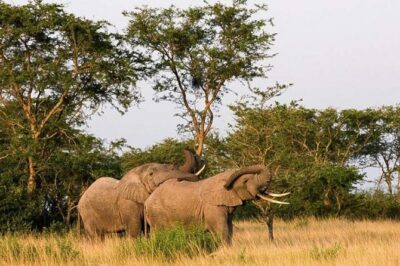
5-Day Pearl of Africa Chimps and Gorilla Trekking Safari
Read our review →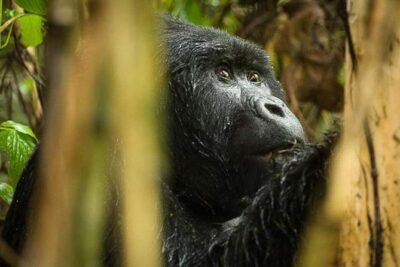
3-Day Tour to Uganda – Gorilla Trekking Bwindi Forest
Read our review →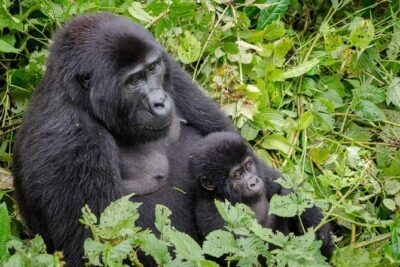
4-Day Uganda Gorilla Trekking and Wildlife Safari
Read our review →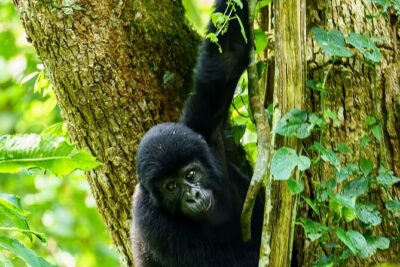
Private 3 Day Gorilla Trekking Safari in Uganda
Read our review →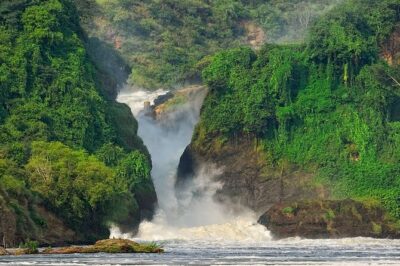
Browse the lists this tour appears in